


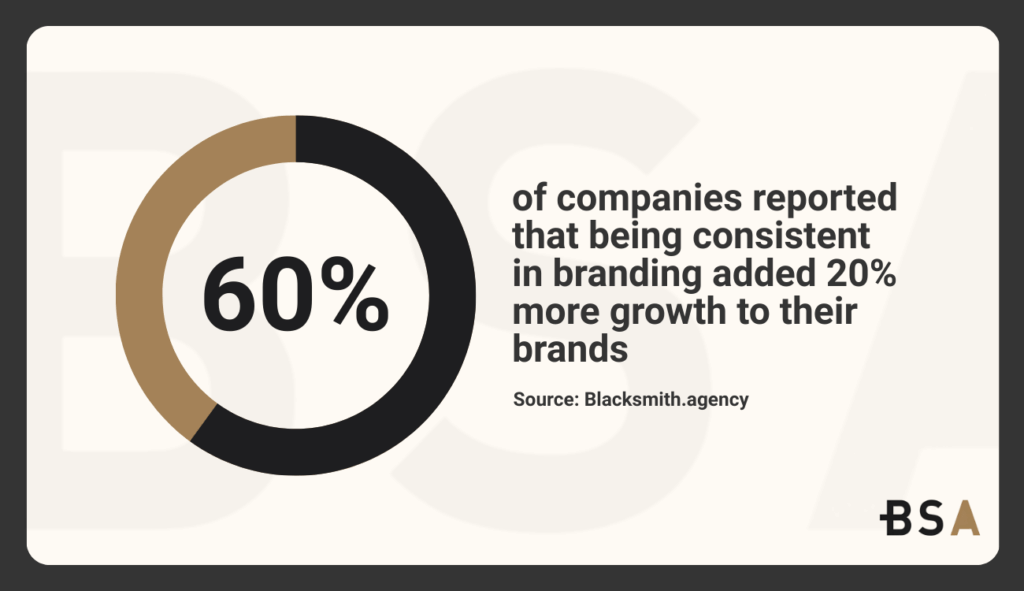
Did you know that 60% of companies reported that being consistent in branding added 20% more growth to their brands? This means that in 2026, you should be following and applying the latest branding trends to your business.
This way, you can start the year out strong and ensure that your business is getting the leads and retention it deserves.
This year, the brands that win are not the loudest or the most complex. They are the ones that adapt the fastest to new trends and are strategically aligned from day one. They fully understand that branding isn’t a campaign but an operating system that guides how a business communicates, behaves, and evolves over time.
This article will explore the most important branding trends worth knowing in 2026, viewing them not as surface-level “trends” but as structural shifts that will reshape how brands build, manage, and provide experiences.
Trying to improve your branding but don’t know where to start? Let us help.
Our Top 17 Branding Trends of 2026
These trends are in no particular order. All of these trends should be taken into consideration when building your brand strategy for this year.
1. Branding is a Strategic Infrastructure, Not a Visual Layer
Branding has changed into a strategic framework. It supports how organizations run, grow, and compete. It is no longer treated as a decorative layer applied at the end of business planning, nor is it confined to logos, colors, or marketing collateral. Instead, brand strategy is now a core part of every major decision a company makes.
This shift is mainly driven by complexity. Modern organizations work in digital ecosystems, global markets, and diverse customer groups. They also have unique product-service models.
Without a clear brand framework, companies face confusion. Their messaging becomes unclear, and their market image blurs. And that is where branding comes into play. Branding now serves as a framework that keeps everyone aligned. It shows how products are positioned and guides the design of customer experiences.
Leading brands now treat branding strategy the same way they would treat a product or service strategy. This approach sets clear limits for innovation. It ensures that experimentation is focused and strategic, not chaotic.
As a result, branding has now influenced everything from M&A decisions to roadmap prioritization and cultural direction.
2. AI-Augmented Branding is Now Operational
Artificial intelligence is now a core part of branding. Starting this year, AI will become part of daily brand workflows. It will help with research, analysis, production, and personalization at scale. But what makes this trend interesting isn’t the presence of AI in branding, but how it is used.
Brands are using AI to analyze audience sentiment, monitor brand perception shifts, evaluate competitive messaging, and identify emerging cultural signals. This enables smart branding choices based on real-time data. It is better than relying on outdated indicators or assumptions.
AI tools can spot patterns that are hard to find by hand. This is especially true for global markets and large datasets.
On the execution side of things, AI is allowing scalable brand expression. Design systems work with generative tools to create on-brand assets. They ensure consistency across all channels.
AI allows content teams to quickly create variations of the same idea. They can do this while staying true to their brand system and core concept. The best brands don’t outsource creativity to AI. Instead, they use AI to enhance human strategy and creative direction.
There is a big risk here, though. For brands without clarity or a clear branding strategy, AI will amplify those mistakes. This means that without a strong brand strategy, AI output becomes generic, inconsistent, or misaligned. You can think of AI as a force multiplier that accelerates strong brands and exposes lackluster ones.
3. Authenticity is Proven Through Action, Not Messaging
Authenticity has shifted from a marketing claim to an operational expectation. In 2026, audiences are skeptical of brand language that is not backed up by meaningful action. As a result, authenticity in branding is now proven through action over anything else.
This change reflects increased transparency. This means reviews, social media, employee advocacy, and real-time feedback make it hard for brands to maintain a curated image. In fact, investigative journalism also challenges their ability to stay disconnected from reality. Inconsistencies between stated values and actual behavior are quickly identified and amplified.
Brands are responding by grounding their narratives in specifics. Rather than broad claims about innovation, sustainability, or inclusion, brands are highlighting concrete decisions, processes, and outcomes.
Both visually and tonally, this has led to more grounded branding. Overly polished aesthetics and abstract slogans are giving way to clarity, restraint, and human-centered storytelling. Authentic and real branding in 2026 is less about emotional manipulation and more about credibility earned over time through consistent behavior.
4. Static Brand Guidelines Are Being Replaced by Adaptive Systems
Traditional branding guidelines can be rigid. They often stop innovation. Many modern brands need more flexibility to grow in 2026. Successful brands are adaptive and prioritize flexibility, scalability, and contextual relevance.
Adaptive systems are built around principles rather than prescriptions. Instead of dictating exactly how every asset must look or sound, they define ranges, variables, and decision-making frameworks. This, in turn, allows for more brand expression to showcase across different platforms, formats, and audiences without losing any sort of coherence.
This trend is especially vital for brands that pump out a lot of content every week. Brands now need to produce assets for websites, apps, social platforms, ads, videos, AI-generated content, and interactive experiences. Rigid systems break under sustained pressure, which leads to either inconsistency or bottlenecks.
5. Experience-Led Branding Has Become the Primary Differentiator
As markets become more crowded, experience tends to overtake aesthetics as the primary brand differentiator. In 2026, people judge branding not only by how it looks but also by how it feels to interact with it over time.
Experience-led branding considers every touchpoint as part of the brand system. This includes designers creating digital UX, teams developing onboarding flows, customer support representatives managing interactions, sales teams executing processes, content creators structuring content, and even how teams handle friction. A complete disconnect at any point destroys trust and weakens brand perception.
This has pushed branding closer to product and UX disciplines. Brand strategy now informs interface decisions, microcopy, navigation logic, and interaction design. This means that people recognize poor usability or confusing experiences as brand failures, not just technical ones.
The strongest brands always deliver experiences that consistently reinforce their promise. They respect user intent, reduce cognitive load, and remove any unnecessary friction.
6. Purpose-Driven Branding is More Disciplined and Focused
Purpose remains a critical component of branding trends in 2026, but it has slowly become a lot more disciplined than it was before. Audiences have grown wary of brands that adopt some sort of cause without any meaningful alignment or impact as a whole.
The main trend here is focus. Brands are choosing fewer causes that directly relate to their mission, capabilities, and influence. Purpose on its own is no longer treated as a marketing angle, but as a strategic commitment that shapes operations, partnerships, and investment decisions.
This discipline also requires internal alignment. Employees must understand and believe in the brand’s purpose, not just communicate it externally. Leadership visibility, internal education, and operational follow-through are essential to credibility.
In 2026, experts evaluate purpose-driven branding trends for consistency and action. Brands that treat purpose as an accessory risk a massive loss of trust, while those that integrate it into their strategies will strengthen long-term loyalty and differentiation.
7. Brand Consistency Has Evolved to Brand Coherence
While consistency has long been a core part of branding trends, in 2026, it has evolved into a more nuanced concept: coherence. Instead of insisting that every brand expression looks or sounds exactly the same, coherence ensures that all expressions make sense together.
This complete shift reflects the nature of modern media. Brands must operate across platforms with different norms, formats, and audience expectations. Coherence allows for easy adaptation without any type of confusion, which ensures that variation still feels intentional and aligned.
Coherent brands maintain clear values, tone, and perspectives, even when execution differs. This approach supports experimentation and innovation while protecting recognition and trust.
In 2026, coherence is a stronger signal of brand maturity than rigid consistency. It demonstrates clear intent and confidence in the brand’s foundation.
Explore how we increased Cision’s direct traffic by 314% with a new branding strategy in our latest case study.
8. Branding is Now Data-Informed
Data plays a big role in branding decisions, but the best brands in 2026 understand that data is not everything. This means that they don’t allow data to dictate their identity; instead, they use data to support their branding by analyzing it without feeling constrained by it.
Brand tracking, sentiment analysis, engagement metrics, and attribution models offer valuable insights into how consumers perceive and how a brand performs over time. All these tools help validate strategies, identify gaps, and measure progress.
That being said, emotional resonance, trust, and long-term equity can’t be fully captured in dashboards. Over-optimization is a big risk that flattens brand personality and completely erases distinctiveness. Smart brands will find the sweet spot between empirical insight, strategic conviction, and creative judgment.
Data should always support branding decisions, but it shouldn’t replace the need for vision, leadership, and a clear point of view.
9. Minimalism Is Now More Intentional
Minimalism is no longer just a stylistic choice for branding trends; it has now matured into a discipline rooted in intention, usability, and clarity. In 2026, brands shouldn’t be simplifying their identities to follow aesthetics, but to reduce friction, cognitive load, and decision fatigue for their potential customers.
Intentional simplicity prioritizes function over decoration. Every design choice should improve comprehension, navigation, or emotional clarity. Typography systems focus on legibility for all devices and layouts. They prioritize hierarchy instead of decoration. Color is used carefully to direct attention, not just to look impressive.
This evolution reflects a branding trend that cares for and respects the user’s time and mental load. In an environment saturated with content, interfaces, and notifications, clarity and simplicity have become a massive competitive advantage. Brands that remove fluff and complexity feel more trustworthy, more confident, and easier to engage with.
Intentional simplicity does not equal a generic design, though. The challenge in 2026 is achieving simplicity while also maintaining distinctiveness. Exceptional brands accomplish this by working on tone, rhythm, restraint, and proportion.
10. Employer Branding is Central to Overall Brand Perception
Employer branding has moved from an HR concern to a core brand strategy pillar. In 2026, how a company treats its employees directly affects how its customers, partners, and investors perceive it.
Public transparency has erased the boundary between internal and external brand narratives. Employee reviews, social platforms, leadership visibility, and workplace culture are now clear signals that shape brand trust at scale. Having a full disconnect between external messaging and internal reality can easily be exposed and is very difficult to repair.
As a result, brands are integrating employer branding into their broader identity systems. Internally, we expect values, tones, and purpose to be the norm, not just to communicate them externally. Recruitment experiences, onboarding processes, internal communications, and leadership behaviors are all recognized as brand touchpoints.
In highly competitive talent markets, employer branding also impacts overall brand growth. Organizations that are able to articulate a clear, credible employer value proposition attract stronger talent and reduce churn. In 2026, branding success is not only measured by market share, but also by who chooses to work with your brand and stay long-term.
11. Long-Term Brand Equity is Regaining Strategic Priority
After years of short-term performance marketing, 2026 marks the year when we start shifting toward long-term brand equity. As customer acquisition goes up, so does platform dependency, and these diminishing returns have highlighted the limitations of traditional growth strategies.
Brand equity, recognition, trust, and preference built over time are once again seen as compounding assets. Strong brands reduce reliance on constant promotion by creating familiarity and confidence that persist beyond normal campaigns.
This shift has changed how brands measure success as a whole. While performance metrics are still important, brands are investing more heavily in tracking perception, consideration, and emotional resonance. These indicators give you insight into sustainable growth other than just immediate ROI.
In 2026, organizations that don’t invest in brand equity will often find themselves trapped in expensive acquisition cycles. Those who completely commit to brand building gain resilience and strategic flexibility.
12. Branding Has Become a Cross-Functional Business Discipline
One of the biggest branding trends of 2026 is that branding is no longer siloed within marketing and design teams. It’s now a cross-functional business discipline that spans leadership, product, customer experience, operations, and human resources.
Brand strategy now provides a shared framework for decision-making across the organization. It informs how companies make products, deliver services, provide customer support, and treat and engage employees. This type of alignment reduces internal friction and creates a more coherent external experience.

Cross-functional branding also improves execution. When teams share a common understanding of the brand’s purpose, priorities, tone, and goals, their decisions become faster and more consistent. Branding shifts from enforcement to internalization.
Strong brands are built from the inside out, which means that alignment with every single team is no longer optional.
13. Brand Voice is Becoming More Human
Brand voice in 2026 is slowly moving away from rigid tone guidelines and welcoming context-aware communication. Rather than sounding the same everywhere, brands are learning to speak appropriately based on audience intent, platform norms, and emotional context.
This 180-degree shift reflects expectations for relevance and empathy. A brand that sounds overly promotional during support interactions or overly casual in a high-stakes B2B decision will always feel and sound disconnected and inauthentic. As a result, brands are defining voice frameworks that allow variation within their brand boundaries.
Context-aware voice also plays a major role in AI-driven interactions. As chatbots, assistants, and automated messaging become the norm, brands must ensure that these touchpoints feel aligned, human, and appropriate when done properly. In 2026, brand voice is judged less on how clever you make it and more on emotional intelligence.
14. Brand Trust Through Transparency
Trust has become one of the most valuable and volatile brand assets of 2026. Rather than having to rely on reputation alone, brands are starting to improve trust through transparency, clarity, and predictability.
This includes transparent pricing, clear data practices, honest messaging, and proactive communication during uncertainty. Brands are now explaining how decisions are made rather than simply announcing outcomes.
Transparency also goes to limitations. Brands that openly acknowledge constraints, trade-offs, or areas of improvement are often perceived as more credible than those that project “flawless” narratives.
In a world built around skepticism and information overload, trust can only be built through consistency and openness, not perfection.
Learn how we increased Philips Steel’s organic traffic by 208% with a new branding strategy in our most recent case study.
15. Brand Differentiation is Shifting From Visuals to Point of View
As visuals become increasingly commoditized, differentiation in 2026 is shifting toward a point-of-view approach. Brands that stand out don’t do it with sheer looks alone, but by what they believe, how they frame problems, and the perspective they bring to their industry.
This trend shows a clear narrative. Brands with a strong point of view clearly explain why their approach is different, what they are working on in the market, and how they see the future unfolding within their industry and niche. This helps them stand out and align with specific audiences rather than broad appeal.
Point-of-view branding also supports content strategy, long-term relevance, and thought leadership. It actively sets the brand as a participant who is trying to shape the industry instead of merely reacting and adapting to it.
16. Branding is Becoming More Resilient and Future-Oriented
Branding trends in 2026 are designed for resilience and long-term performance. They invest in principles, narratives, and systems that can evolve alongside markets and tech. This type of mindset allows brands to absorb change without constant reinvention.
Resilient branding is built to adapt without losing itself as a whole. They invest in principles, narratives, and systems that can evolve alongside markets and technologies. This mindset lets brands absorb change without having to constantly reinvent themselves.
Resilient branding mainly supports longevity. Rather than chasing trends, these brands focus on enduring values, clear positioning, and adaptable expression. They prepare not just for what is next, but for what is unknown. This year, the strongest brands are the ones designed to last, not just launch.
17. Brand Governance as an Advantage
Brand governance is emerging as a differentiator rather than an internal constraint. As brands scale, the ability to govern brand expression efficiently becomes a strategic advantage.
It’s no longer about policing creative teams or enforcing rigid compliance. Brand governance is about enabling speed while staying aligned. Strong brand governance frameworks define ownership, decision rights, escalation paths, and quality standards, enabling teams to make brand decisions quickly without losing coherence.
In 2026, brands that invest in governance infrastructure, brand enablement tools, training, and living guidelines are better equipped to scale without dilution.
Get a Custom Branding Strategy That Increases Conversions With Blacksmith
After going through this list of branding trends for 2026, it’s clear that if you want to succeed, you have to put in the time and effort to improve your branding. But let’s face it, creating a brand-new branding strategy and implementing these branding trends into your business can take weeks and even months of planning and execution.
This is time you could be using on other aspects of your business, so what now?
That’s where we come in. Blacksmith is a Professional Branding Agency with a group of seasoned digital marketers ready to create the perfect branding strategy for your business. From adding the best branding trends to implementing niche and custom strategies for your industry, we’ll ensure your business gets the results it deserves.
Still unsure if investing in a new branding strategy is what you need for 2026? Don’t worry, click here to schedule a call with us and we will provide you with a free audit. This way, we can show you all of the areas where a new branding strategy could increase your conversions and overall visibility.