

Are you tired of losing million-dollar listings to agents with half your experience?
It happens every single day. You might have the best negotiation skills in your city, but if your brand looks outdated, the seller goes straight to your competitor. This is exactly why real estate branding decides who gets the listing and who gets left behind.
In 2026, your brand is your primary revenue engine. And when modern buyers need your service? They do not call you first. They vet your agency online. If your visual identity and messaging fail to signal premium trust, you lose the deal before you even know the prospect exists.
Relying on a generic website guarantees failure. You need an architecture engineered to convert high-net-worth clients.
To find out why some agents build million-dollar real estate brands while others struggle with generic listings, we studied 10 real estate brands whose results help them dominate their local markets. Each one follows specific patterns you can copy.
This guide breaks down exactly what they did and how you can apply their strategies to your business in 2026.
Key Takeaways
- In 2026, real estate branding operates as your primary revenue engine, dictating whether you secure million-dollar listings or lose them to lesser-experienced competitors.
- Dominating your local market requires defining a strict unique selling proposition and abandoning a generalist approach in favor of hyper-niche specialization.
- Top brokerages weaponize authentic storytelling and uncompromising visual consistency to engineer psychological triggers that effortlessly attract high-net-worth clients.
- Your website demands a high-performance, mobile-first architecture to establish immediate premium trust.
- Scaling your modern brokerage requires partnering with a specialized web design firm to build a website engineered specifically for high-ticket lead conversion.
Top 10 Real Estate Branding Examples to Emulate in 2026
The difference between a $500,000 producer and a $50 million powerhouse is not work ethic. It is a strict market positioning.
The agencies dominating 2026 treat their visual identity and important revenue-generating assets. They do not guess. Instead, they engineer specific psychological triggers to attract their exact target demographic while aggressively repelling unqualified leads.
Below are ten real estate branding examples that completely redefined their respective markets. Study their specific frameworks, steal their operational blueprints, and deploy them to capture the highest-net-worth buyers in your city.
1. Porto Montenegro: Masterclass in Luxury Real Estate Branding
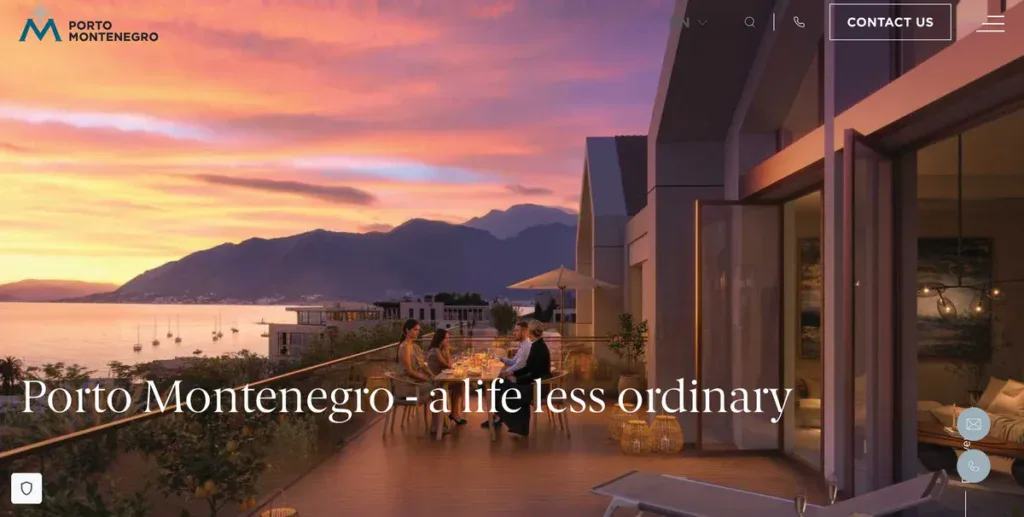
How do you convince billionaires to park their superyachts at a forgotten Austro-Hungarian naval base? You do not sell them a marina. You sell them a complete transformation story.
In 2007, developer Peter Munk executed a real estate branding strategy that repositioned Tivat from a geographic oddity into the Monaco of the Adriatic. He understood that ultra-wealthy buyers demand destination-level prestige before they ever look at square footage.
Their visual identity established an immediate, authentic heritage. They combined an elegant Wordmark with an Icon featuring Montenegro’s double-headed eagle. Instead of generic luxury gold, they pulled their exact color palette, stark grays and deep teals, directly from the local dolomite rock massifs and Boka Bay.
They paired this aesthetic with the DisplaySweet digital platform to deliver immersive, off-plan presentations to international buyers who could not physically visit. Furthermore, they segmented their branding by specific neighborhoods, allowing them to target wellness-focused buyers and elite hospitality investors simultaneously without diluting their core message.
This narrative-driven branding created massive secondary economic gravity. Porto Montenegro captured 62,065 digital engagements, dominating 38% of the country’s luxury real estate market.
By branding an exclusive lifestyle rather than just concrete, property prices within the development doubled in just seven years.
2. The Corcoran Group: Personal Brand Integration
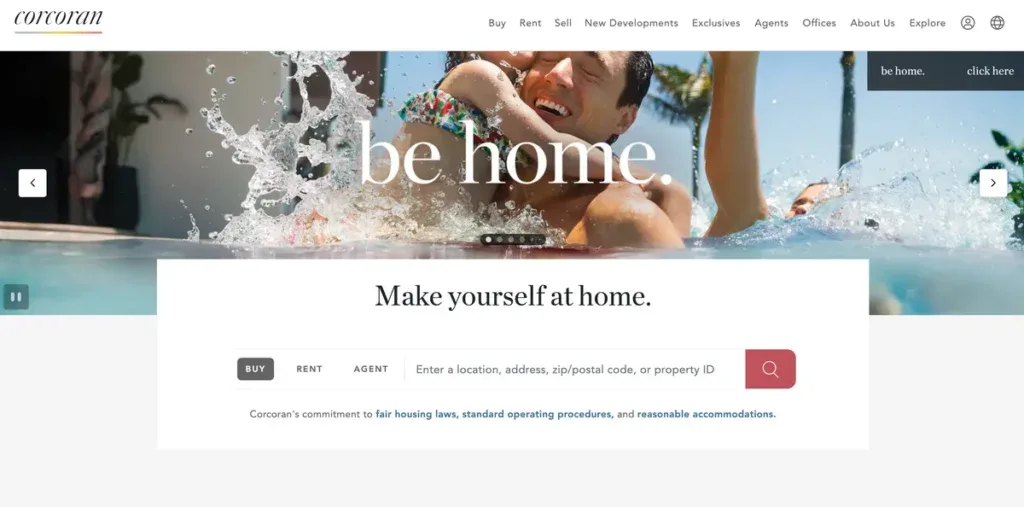
Industry insiders called it a massive overpay when Barbara Corcoran sold The Corcoran Group for $66 million. They were completely wrong. Half of that purchase price came directly from her brand equity, not just her sales volume.
Corcoran initially positioned herself as New York’s absolute real estate authority through creative, earned media, proving that third-party credibility beats paid self-promotion every single time.
As the company scaled, it evolved this personal brand into a massive enterprise asset. They launched the “Live Who You Are” platform, pivoting completely from agent accolades to emotional storytelling.
Their visual identity reflects an approachable sophistication. They utilize Chronicle Display typography anchored by a strict primary palette of black, white, and a distinct soft cyan. The brand also deployed specific regional color bars to establish hyper-local dominance: orange and grey for New York, pink and green for Palm Beach, and yellow and blue for the Hamptons.
They actively dismantled the traditional luxury culture where marketing revolves around the agent’s ego. Instead, they focused entirely on the buyer’s actual lifestyle and human connections.
This human-first real estate branding strategy successfully captured the highly lucrative Millennial and Gen Z demographics. By shifting the narrative, their social media presence grew by 25% in a single year, proving that undeniable brand equity literally doubles your enterprise valuation
3. Century21: Global Brand Consistency
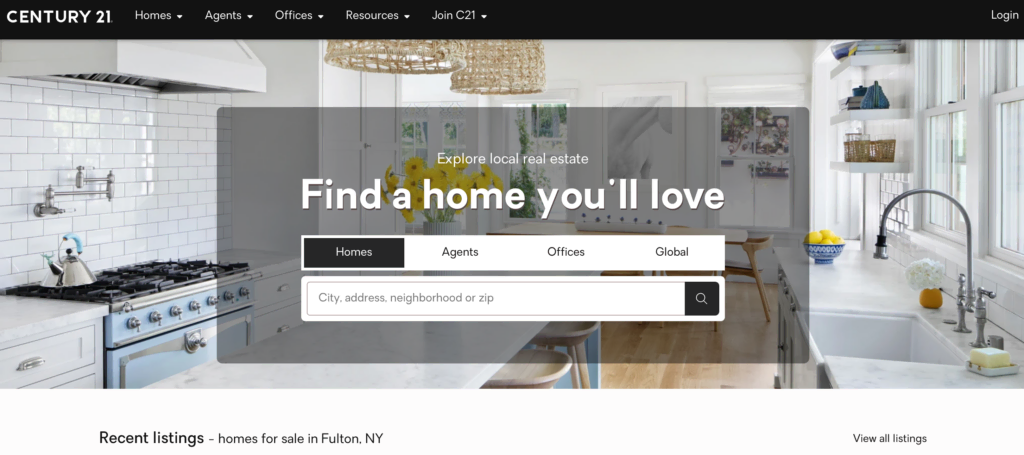
Running 8,000 offices across 80 countries sounds like a logistical nightmare. How do you enforce brand standards across 118,000 independent agents without crushing their individual personalities?
Century21 solved this through a ruthless approach to real estate branding. In 2018, they made a massive operational pivot: they eliminated hundreds of underperforming U.S. affiliates to enforce strict global quality control. They modernized their entire visual identity, stripping away their outdated house icon because commercial properties do not need a residential symbol.
They anchored their new look in a highly recognizable palette of Legacy Gold and Obsessed Gray. To ensure absolute visual uniformity across massive global markets, they enforced strict font and typography guidelines utilizing approved font families like Arial, Barlow, Oakes, and Typold.
Furthermore, they engineered three distinct visual architectures (Residential, Fine Homes & Estates, and Commercial), giving agents a powerful, unified stage to sell from while maintaining specialized local appeal.
This relentless dedication to global consistency paid off massively. By giving their agents a premium, standardized platform, Century21 secured J.D. Power’s Highest Overall Satisfaction awards. When your buyers see those gold and black colors, they immediately inherit decades of established trust without you having to say a single word.
4. RE/MAX: Trust-Based Branding
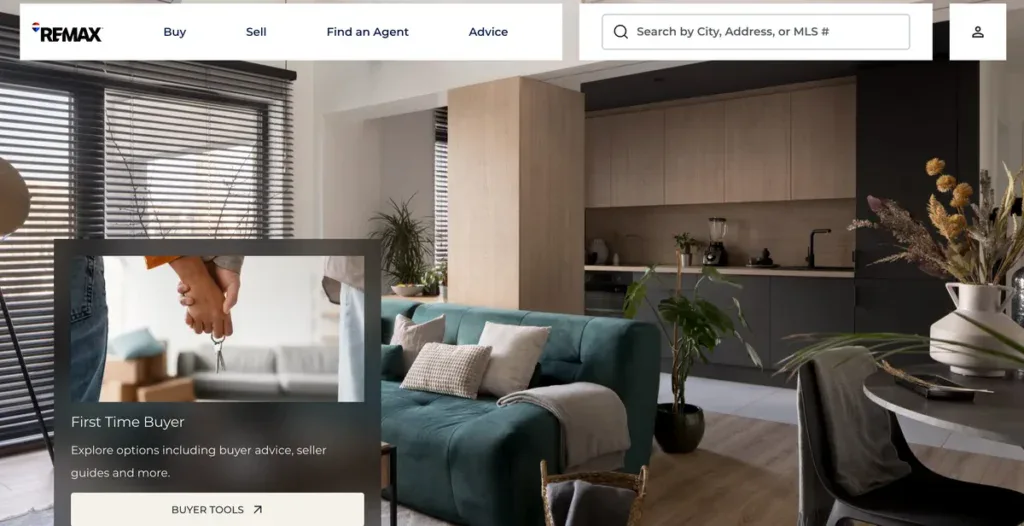
What really drives agent selection? When RE/MAX commissioned consumer research through Camp + King, one metric destroyed all others: absolute trust.
Instead of competing on flashy marketing or commission splits, RE/MAX engineered a real estate branding strategy around third-party validation. They possess decades of established credibility, anchored by their iconic 1978 hot air balloon logo.
But legacy brands die if they do not adapt. In 2025, they executed a digital-first branding refresh specifically targeting Gen Z and Millennial buyers entering the housing market. They updated their visual identity with bold graphics optimized for social platforms without losing their core heritage.
More importantly, they empowered their network with enterprise-level tools. By deploying MAX/Tech custom websites powered by BoldTrail, Photofy for branded social content, and RE/MAX Hustle for video marketing, they ensured every single agent projects a unified, highly polished digital presence.
This relentless focus on trust completely dominates the market. RE/MAX agents were voted the number 1 Most Trusted Real Estate Agents in the US and Canada for four consecutive years (2022-2025). Because they lead the industry in unaided brand awareness, their agents average twice as many transaction sides as competing agents at large brokerages.
5. Redfin: Technology-Driven Real Estate Brand
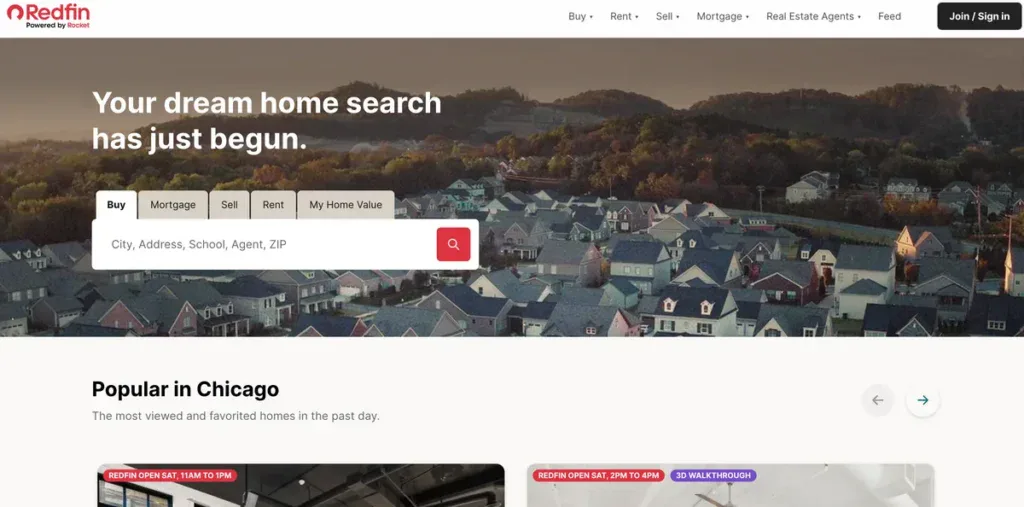
Most real estate companies make money when deals cost more. Redfin flipped the entire industry model. Founded in 2004, they built their real estate branding strategy around a simple concept: using technology to cut costs instead of adding them.
Instead of commission-hungry agents pushing deals, Redfin pays salaries. This fundamentally aligns their incentives with customer satisfaction. Visually, they ditched their original brand colors for a vibrant, high-contrast red.
They eliminated 70% of digital visual clutter from their interfaces and introduced warm, hand-illustrated elements to shift from corporate coldness to consumer advocacy. Their brand principles, Advocacy, Technology, and Value, are engineered into an Agent Tools platform that puts everyone on identical dashboards, eliminating coordination nightmares.
Their branding focuses entirely on radical transparency. They openly publish their 1% to 1.5% commission rates, shattering the 2.5% to 3% industry average, and advertise average buyer refunds of $1,900 per transaction.
The results are undeniable. Redfin’s Net Promoter Score hits 50, destroying the industry average of 38. Their website draws 6 million monthly visitors, with their agents handling three times as many real estate transactions.
6. Coldwell Banker: Heritage Meets Innovation
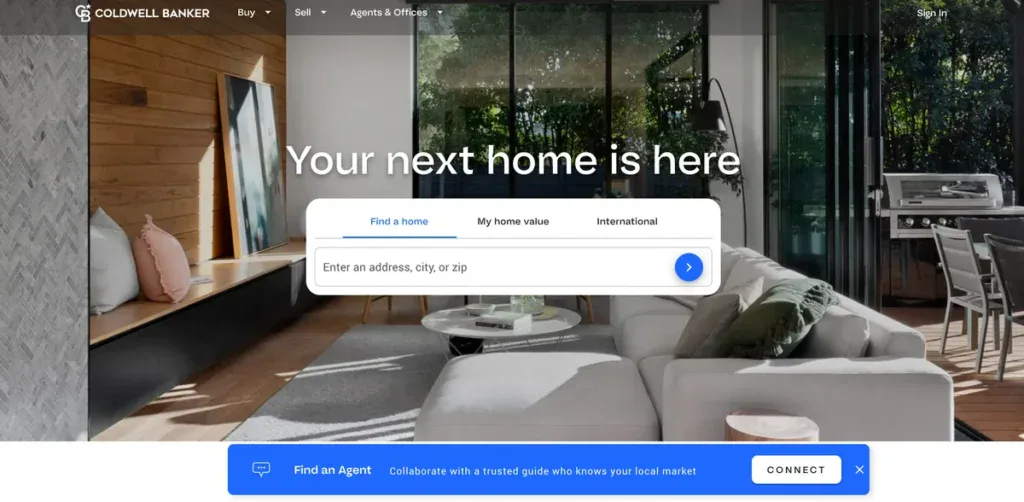
Founded in 1906, Coldwell Banker faced a unique challenge. They needed to make 119 years of history feel fresh without losing their authority. Most legacy brokerages get trapped by their past. Coldwell Banker used theirs as rocket fuel.
They launched their 2025 Live Well With Coldwell real estate branding campaign, moving past transactional messaging to focus entirely on lifestyle transformations. They backed this emotional storytelling with hard data by introducing the Move Meter, a proprietary digital tool that compares cities based on cost of living and amenities.
Visually, their identity is anchored by the CB North Star logo, a psychological signal that they have guided buyers for a century and continue to lead the market.
By securing premium Thursday evening advertising placements on Prime Video during football season, they embedded their brand directly into American tradition. Furthermore, their Global Luxury program established the absolute gold standard, proving that premium positioning works across all price points.
The results? Coldwell Banker agents recently completed 48,444 transactions of homes priced at $1 million or more in a single year. That equals an astonishing $288 million in daily luxury sales, securing their spot as the number 1 ranked real estate ad for 13 consecutive years.
7. One Dalton: Conceptual Luxury Marketing
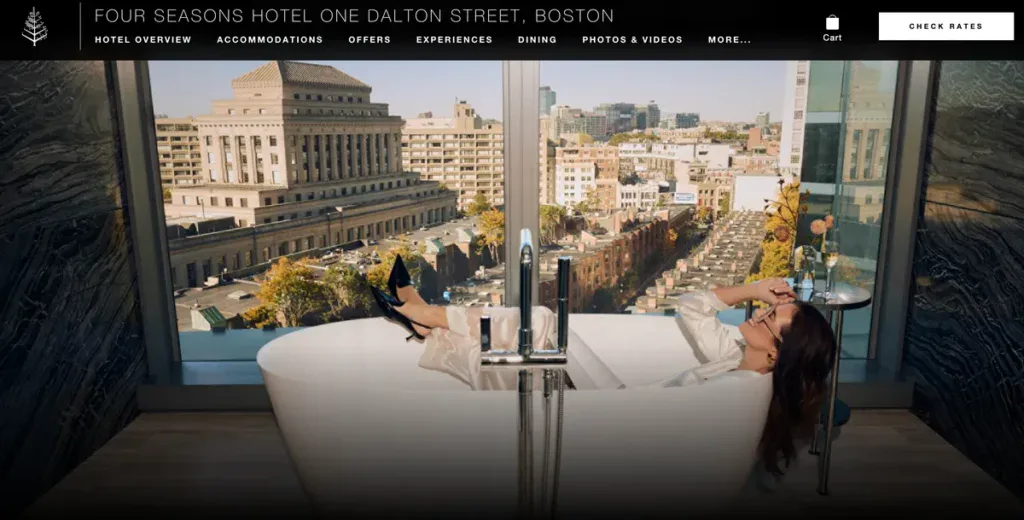
A 61-story tower in Boston completely changed how luxury developments market themselves. One Dalton threw out the typical playbook. They did not spam buyers with photos of marble countertops or generic square-footage metrics.
Instead, their real estate branding strategy turned neighborhood culture into visual metaphors. Life at One Dalton was branded as layered, unexpected, and quietly magical.
More importantly, developer Carpenter & Company maintained absolute discretion. They ran zero public advertising campaigns. They treated the 180-unit building like a private offering to attract ultra-wealthy buyers who value privacy over flashy visibility.
Their visual assets operated like museum pieces: sales brochures with signature foil stamping, invitations on thick presentation board with gilded edges, and custom polished stainless steel lettering.
By relying on private marketing and visual metaphors over feature lists, they successfully sold 180 luxury condominiums in New England’s tallest residential tower, proving that artificial scarcity builds exclusivity better than mass advertising.
8. Porsche Design Tower: Automotive-Residential Fusion
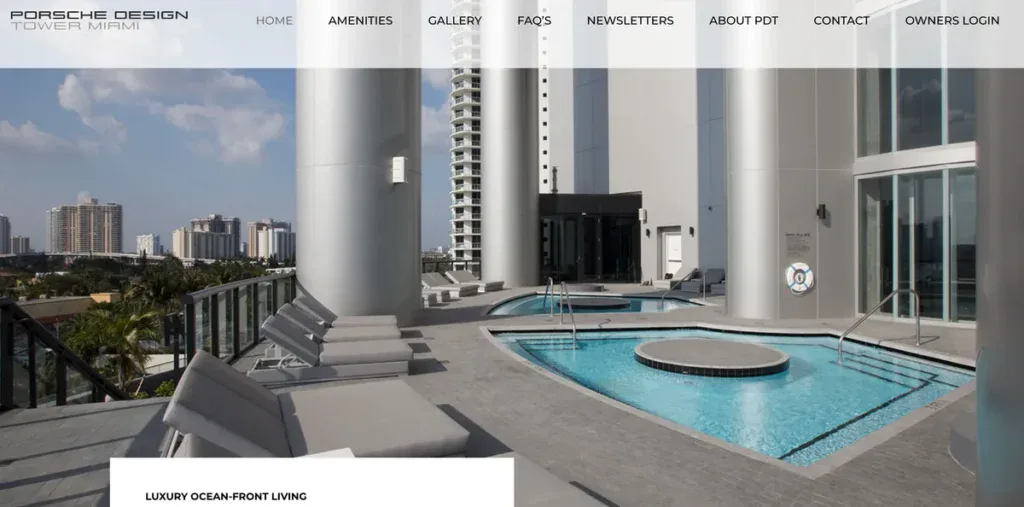
Taking a luxury car up an elevator to your 50th-floor apartment sounds absurd. Until Dezer Development executed it flawlessly through their master licensing agreement with Porsche Design Group.
This is the peak of innovative real estate branding. They did not just slap a logo on a building. They integrated Porsche’s core automotive DNA into the architecture through the patented Dezervator, an elevator that carries cars directly into the apartment.
Their visual identity utilizes Porsche’s signature black, gray, and stainless steel triad. But their brand psychology goes much deeper. The brand positioned itself around extreme privacy. Residents drive directly into their units without ever walking through a public lobby or interacting with staff.
This uncompromising commitment to an ultra-private brand identity generated unprecedented demand. The 60-story Sunny Isles Beach tower attracted the absolute pinnacle of global wealth, with 2% of the world’s billionaires purchasing units.
9. Waldorf Astoria Residences: Timeless Elegance
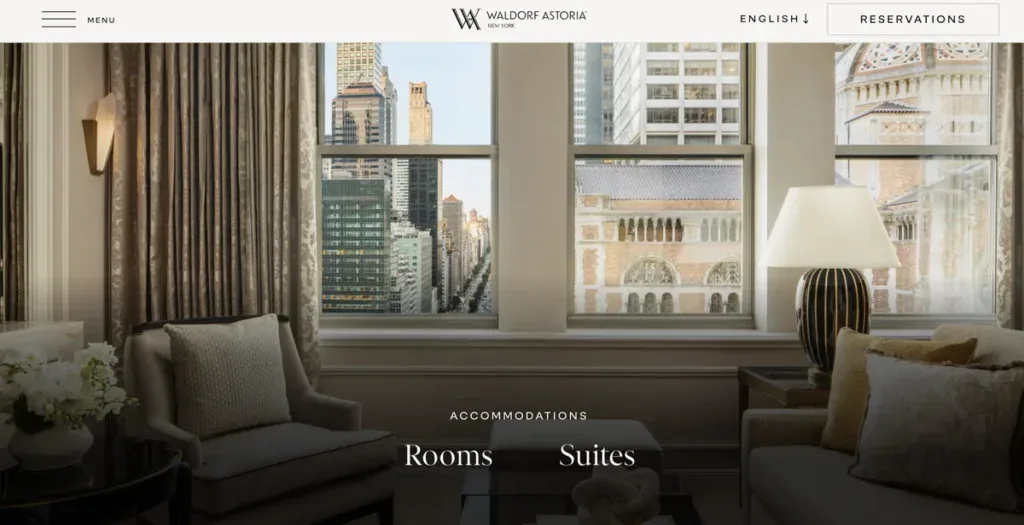
Converting hotel service into residential sales requires absolute precision. Waldorf Astoria took 130 years of hospitality expertise and engineered a residential real estate empire.
Waldorf Astoria stands out by building its core identity around elegance. Ultra-wealthy buyers demand hotel-level amenities without the transient nature of a hotel. The brand solves this by positioning itself as “The Ultimate Host.”
Their visual identity incorporates bespoke Pantone colors, bronze accents, peacock columns, and rich blues. Masterfully, they adapt their brand palette geographically, deploying dark, moody tones for urban centers and lighter, airy schemes for coastal resorts.
Privacy features anchor their high-end branding. They market separate residential entrances and concierge closets with interior locks for discreet deliveries, separating owners completely from transient hotel guests.
By translating their hospitality reputation into real estate credibility, their Miami sales center hit 84% of its target in half the projected time.
10. K11 Artus: Digital-First Real Estate Branding
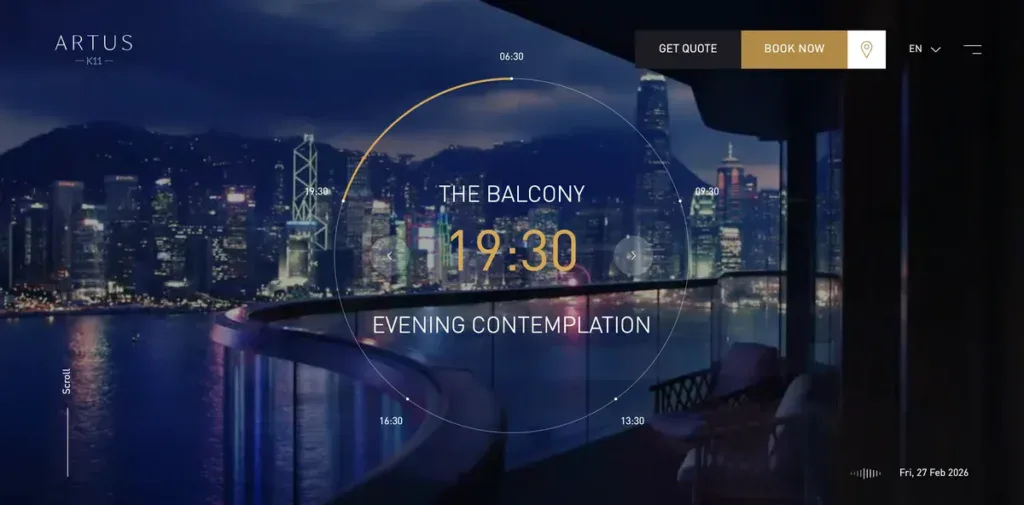
Traditional property tours fail when your target buyers live across different continents. Adrian Cheng understood this and built K11 ARTUS in Hong Kong around a completely different cultural commerce identity.
They integrated three core elements: Art, People, and Nature and positioned themselves as Asia’s first luxury serviced residence with a social mission to preserve disappearing Chinese artisanship.
K11 Artus also eliminated glossy brochures. Their website utilizes interactive digital interfaces, AR technology in physical spaces, and the AMICI Digital Concierge via messaging apps. Residents order from the adjacent mall via in-room IPTV. They even created a signature woodfruit diffuser to let guests recreate the brand’s exact atmosphere anywhere in the world.
By replacing traditional tours with high-end digital experiences, K11 Artus drove massive sales growth during the 2020 lockdowns, proving that interactive technology converts international buyers.
5 Actionable Real Estate Branding Ideas and Tips for 2026
Analyzing these examples reveals the exact patterns you can deploy. Here are five actionable real estate branding ideas you must implement today to secure your market share.
1. Define Your Strict Unique Selling Proposition (USP)
Attempting to be everything to everyone dilutes your brand into complete irrelevance. You must define a strict client profile.
Determine exactly who drives your highest profit margins. Detail their income bracket, investment goals, and primary pain points. Once you identify this buyer, focus entirely on aspects your competitors cannot replicate. Turn your specific operational advantages into hard, undeniable benefits.
2. Build a Cohesive Visual Identity
Visual branding establishes your credibility instantly. A cohesive look proves to high-net-worth clients that your agency is meticulous. Your logo must project enterprise-level professionalism. Choose a signature color palette that reflects your specific niche. Most importantly, enforce strict photography guidelines.
Whether you utilize bright, airy shots or dramatic, moody angles, you must stick with one consistent style. This ensures your branding for real estate is instantly recognizable on massive portals like Zillow before a buyer even reads your name.
3. Engineer a High-Performance Website
Your website operates as the central nervous system of your entire real estate branding strategy.
You can run the most beautiful campaigns in your city, but if your website takes too long to load, it will. Your digital equity vanishes immediately. You must prioritize a strict mobile-first architecture.
Ensure your site passes Google’s Core Web Vitals assessments and integrates high-speed IDX feeds. A website that loads instantly subconsciously tells the buyer that your agency operates with uncompromised precision.
4. Focus on Niche Specialization
Generalists struggle. Specialists scale. Focusing on a hyper-specific niche allows you to become the undeniable market expert. You can specialize by geographic area, customer type, or specific property class.
Niche markets face significantly less competition. When you establish yourself as the definitive authority in commercial or luxury real estate branding, you naturally command higher commission premiums and capture high-intent leads effortlessly.
5. Create Authentic Brand Stories
Modern audiences instantly detect manufactured, fake marketing. In 2026, buyers search for rich, authentic stories with real financial stakes.
Authenticity is not about looking pretty. It comes from speaking with absolute specificity. Effective storytelling transitions static developments into living, breathing communities. Prioritize real customers over idealized personas, and demand hard proof over excessive polish. You must build a permanent, long-term relationship with your reputation.
Scale Your Brokerage with a Premier Realtor Web Design Agency
If your website fails to communicate elite professionalism, you will inevitably lose your market share. Now, upgrading your brokerage requires significantly more than printing a new logo. It requires deep architectural web engineering and aggressive performance optimization.
At Blacksmith Agency, we operate exclusively at the intersection of high-performance technical engineering and strategic digital growth. As your premier Realtor Web Design Agency, we bring the specialized technical expertise necessary to transition your brokerage into a highly scalable brand.
We analyze your target demographic, integrate your complex MLS data feeds, and rebuild your entire web experience to capture high-ticket leads instantaneously.
Stop letting an outdated brand dictate your revenue ceiling. Contact Blacksmith Agency today to schedule your digital branding consultation and secure your absolute market dominance.