


Do you know that the U.S national occupancy rate for multifamily properties dropped to 94.4% in April 2025?
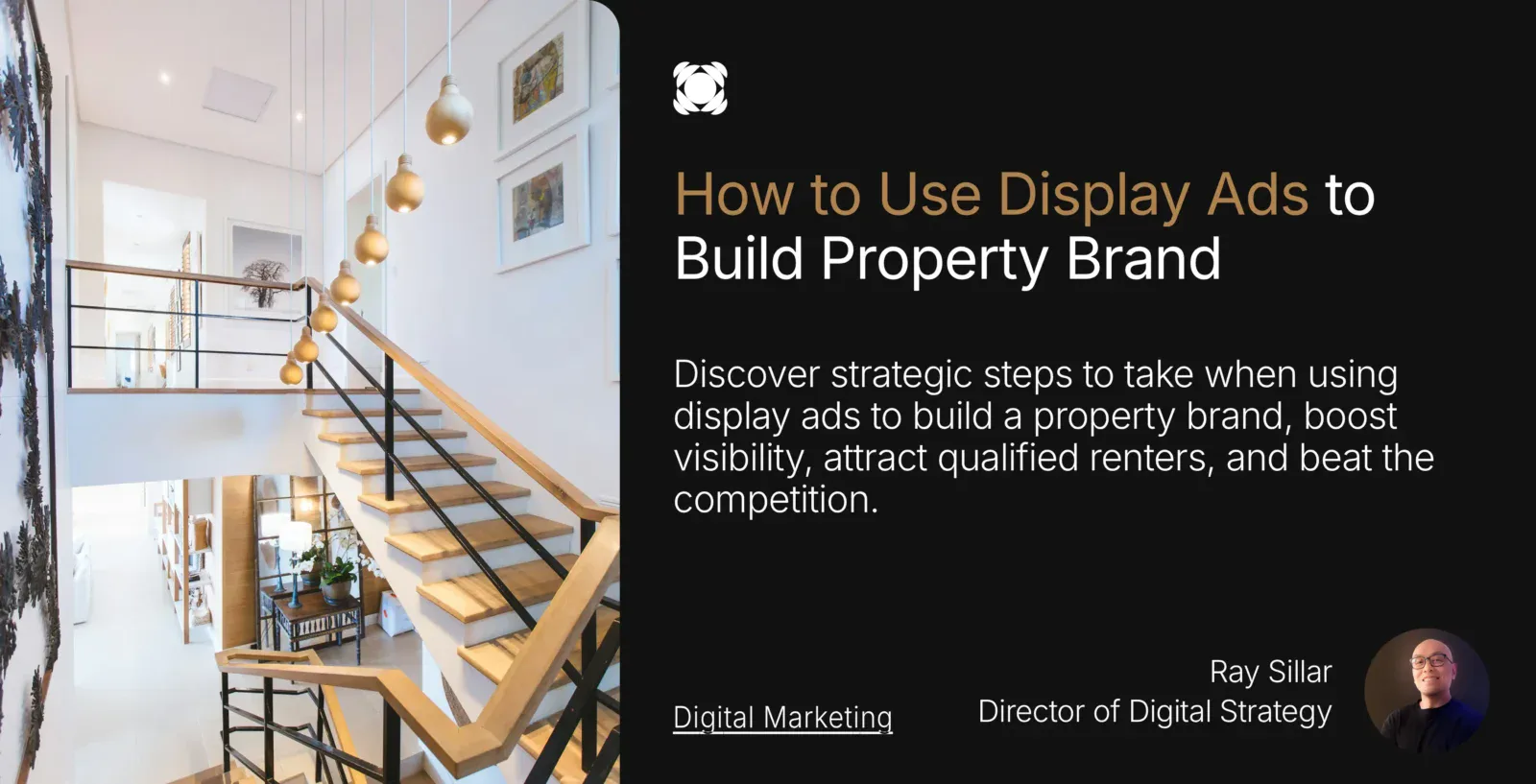
With the rate at its lowest level in more than a decade, filling property units is tougher than ever. This is why property brands must prioritize their awareness efforts. If you aren’t using display ads to build a property brand, you are likely losing qualified leads to competitors who do.
You can build the best building in the city with the most sought-after amenities, but if people don’t know it exists, your units will remain empty. And so long as you can’t fill your units, you continue to lose money.
For so long, property managers could simply list their buildings on sites like Zillow or Apartments.com and wait for the phone to ring. While it works for people who are actively searching for apartments, it does nothing to establish a genuine property brand. Instead, it forces you to compete on price alone.
To truly win in the property market, you need to start creating demand for your apartments. Unlike the digital ads used by solo realtors, enterprise-level display ads should allow you to manage your reputation, target your competitors’ traffic, and make your property the first name prospects think of when they want to move.
Before we break down how to do that, consider what makes display ads different and why they should be your top choice for building brand awareness in today’s property market.
How Display Ads Differ From Search Ads
The biggest mistake property managers make is judging display ads the same way they judge search ads. This can make you cancel your campaigns prematurely or waste your budget.
To prevent this, you must distinguish between the efforts to capture existing demand and tactics that create demand.
Capturing Existing Demand with Search Ads
Google Search ads are designed to capture demand that already exists. A user actively searching for luxury apartments in Austin can see your text ad and click.
For such ads, success is a function of how many people click the ad and fill out your form. Is it effective? Yes. Is it limited? Also, yes!
Chet Holmes Buyers pyramid suggests that only 3% of your market is ready to sign a lease right now. It means you’ll be fighting expensive battles with your competitors for a meagre 3% of the market.
Creating Future Demand with Display Ads
Display ads allow you to target the remaining 97% of your market. It doesn’t matter if they are not searching yet. The idea is to put your brand in their faces so that when they finally need an apartment, you’re top of mind.
Essentially, this means that display ads allow you to cultivate your audience till they are ready. A user sees your stunning creative while browsing a local lifestyle blog. They don’t click, but a seed is planted. Next, they find you on ESPN and then see you again when they are checking out the weather projections on their Weather app.
When they are finally ready to move to a new apartment, 3 months later, they don’t search for “apartments near me.” They search for your building by name, shifting the leverage in favour of your brand. And the benefit doesn’t end there.
Using display ads breeds a sense of familiarity with your brand. It allows your target demographic to feel like they are seeing your building everywhere. This makes your building appear popular and prestigious, increasing the customer’s willingness to pay higher rent for your apartment.
How to Use Display Ads to Build a Property Brand in 5 Steps
You won’t dominate the property market by wishful thinking. To get ahead of your competitors, you need an actionable strategy. Drawing from what we’ve seen work for our clients, here are 5 specific ways asset managers can use display ads to build a property brand and fill up their units quickly.
1. Use Programmatic Display
Not too long ago, display ads were a good way to waste money. With the basic Google Display Network, your ads would target everyone in a 10-mile radius. That would lead to a lot of unqualified traffic.
For example, showing a penthouse ad to a college student or to someone who just signed a mortgage is a wate and it is unlikely to bring any returns.
Today, your display ads don’t have to be so messy with Programmatic Display (Automated Ad Buying).
How Programmatic Display Works
Programmatic technology uses Artificial Intelligence (AI) and Real-Time Bidding (RTB) to purchase ad space only when the user matches your specific criteria. It happens in milliseconds.
Apart from directly targeting the right audience, programmatic ad buying also protects your brand reputation by ensuring your ads do not appear on random low-quality sites like gaming sites, political rant blogs, and weird news stories.
Instead, your ads show up on premium brands that are trusted and have high authority, like The New York Times, ESPN, and industry-specific publications like Architectural Digest.
By placing your ad next to high-quality content on a reputable website, you implicitly borrow the authority of that publisher to make your brand appear more trustworthy.
2. Use Geofencing to Target Competitors
For property developers, location is everything. Your digital strategy should reflect that. And the most powerful tool for beating your competitors is Geofencing.
Geofencing allows you to delineate a real-world location virtually. As such, when a person’s device enters that earmarked zone, they are added to your ad target list.
You can go even deeper with Addressable Geofencing, which allows you to target specific physical households in your specified location.
Provided you can get access to a list of renters whose leases will expire within 90 days, you can directly set your ads to display at their home addresses. Almost like a direct mail postcard, but cheaper and more frequent.
Geofencing your Competitors
You can take your geofencing one step further by delineating a virtual fence around your competitors. It is also known as Geo-conquesting. Done well, it can directly lead users from your competitors to your business just when they are about to make a buying decision.
However, your offer will need to be better than your competitor’s to get them to walk further to your own location.
How do you use this geo-conquesting strategy?
- Setup: You put a virtual fence around the leasing offices and parking garages of your top 5 competitor buildings.
- Trigger: A potential renter parks around Competitor Building A to make a purchase, and while browsing on their device, they are added to your ad list.
- Hook: Later that evening, while they are at home scrolling through Instagram or checking the weather, they start seeing a display ad for your property.
- The Message: The ad makes an irresistible offer to make them look beyond your competitor.
Should you choose not to use this strategy, know that your competitor may also be targeting your location.
3. Create Lifestyle Visuals That Sell the Property

Another prime example of how to use display ads to build a property brand is by creating lifestyle visuals.
Now, much of the real estate advertising out there falls short when it comes to creative execution. If it’s not a generic-looking 3D render, it is stock imagery of models in properties we don’t know about. Or worse still, a headshot of a leasing agent.
To successfully build a property brand, you must stop selling the specs of your apartment and start selling the lifestyle users will benefit from when they move in.
Use Motion (HTML5 Ads)
Static images get ignored easily, especially when the feed is cluttered.
To capture attention, we recommend using HTML5 Animated Ads that allow for some interaction within the ad frame. Instead of a static image, you get an animated image, making it easier to catch attention.
What’s more? HTML5 ads tend to have a 5.5 times higher click-through rate when compared to static images or banners.
Focus on What Sells Rather. Skim Function
There will always be that tendency to clutter your ad with functional details. There’s no need to waste time listing things like square footage, pet policies, or the presence of a washer/dryer in the unit. In 2026, these are already table stakes for modern luxury buildings.
Instead, focus your branding strategy on high-impact imagery that conveys a specific feeling about your unit. This can be anything from sophistication to calm exclusivity or even high energy. You can also keep your copy minimal while allowing the visuals communicate the bulk of your ad message.
4. Nurture Leads with Retargeting
Many people make a lot of consideration before eventually signing a lease. This period of consideration can span weeks or months. However, it isn’t that they will keep visiting your website.
Maybe you will find some of these leads on Facebook. In that time, they will visit your website once, browse a few floor plans, and then leave, often without even booking a tour. Without using display ads to build a property brand through retargeting, those users are lost forever.
Retargeting (or Remarketing) allows you to target users who have previously visited your website but didn’t convert. It allows you to send reminders about your building to them while they are browsing the web on other sites.
For a successful remarketing, it is best to tailor the ad based on what the user initially browsed on your website. This is known as dynamic retargeting.
For example, a user who looked at the 2-bedroom penthouse should get an ad showing them that same unit. If it’s a different one, that’s generic, and the conversion rate is lower.
Frequency Capping
In remarketing, it’s easy to overstep and become annoying. If a user has to see your ad 50 times a day, you’re pestering them, and they will likely develop negative feelings toward your brand.
To prevent this, you must limit the maximum number of times each user can see your ad in a day. As a professional lead generation agency, we recommend aiming for 3-5 impressions per user daily. This keeps you top-of-mind during their decision process without becoming an intrusion.
5. Measure Success Beyond the Click
Clicks are not enough to justify your ad spend to investors or owners. For that, you need the view-through conversion (VTC) metric.
The VTC tracks users who saw your ad, didn’t click, but later visited your website directly (by typing the URL) and scheduled a tour. This proves the ad worked since the ad created the awareness that led to the action, even if the user didn’t interrupt their browsing session to click immediately.
For larger buildings (300+ units), you can go further with a Brand Lift study. This calculates the increase in organic search volume for your property name after the display ad campaignstarts.
For example, if 50 people monthly searched for “Brook Apartments” before the campaign, and 250 people per month search for it after 3 months of display ads, that 5x increase suggests brand value growth and may be attributed to the campaign.
Integrating Display Ads with Your Tech Stack
To truly maximize the ROI of display ads to build a property brand, your ads must be part of a broader strategy that includes integrations with your technology stack.
CRM Integration
Your ads should draw from your Customer Relationship Management (CRM) system. By centralizing data across your physical touchpoints and integrating it with your online platform, you will be able to go further with Offline-to-Online targeting.
For example, you can take a list of people who toured 6 months ago but didn’t lease and upload them to your ad platform. You can then serve specific ads to this group with offers that encourage them to take a lease now.
Likewise, integration with the CRM is important so you can exclude current residents from new campaigns. Especially when you’re adding offers they never enjoyed.
Finding Lookalike Audiences
You can also get new customers by uploading your CRM data.
When you upload a list of your best residents (based on whatever parameters are most important to you), the ad platform’s AI analyzes this list and finds other people in your target area with similar interests and profiles. This is your lookalike audience
Ideally, you need at least 100 people for a standard list. However, getting up to 1,000-5,000 will guarantee a stable model. Either way, targeting your lookalike audience is often highly effective due to their similarity to your ideal customer profile.
How Blacksmith Agency Can Help
Building a property brand takes more than just buying ads. You can have the best ads in the world and still lose revenue if it leads to a confusing website that is not optimized for conversion.
As such, you need a modern website that supports your growth and objectives before your ad campaigns. And that’s where we come in as property management web design experts.
At Blacksmith, we build high-performance websites for top property brands. We ensure your efforts to use display ads to build a property brand yield the best possible results by
- Building custom websites designed to convert the traffic from your ads.
- Creating a seamless experience, using high-quality video backgrounds and beautiful layouts that prove your building is truly luxurious.
- Setting up the advanced tracking tools needed to measure View-Through Conversions
- Timely reporting so you see exactly where your money is going and how much revenue it is generating.
If you are ready to get ahead of your competitors and fill your units, let’s talk. Contact Blacksmith Agency today to audit your current digital presence and build a roadmap to market dominance.