



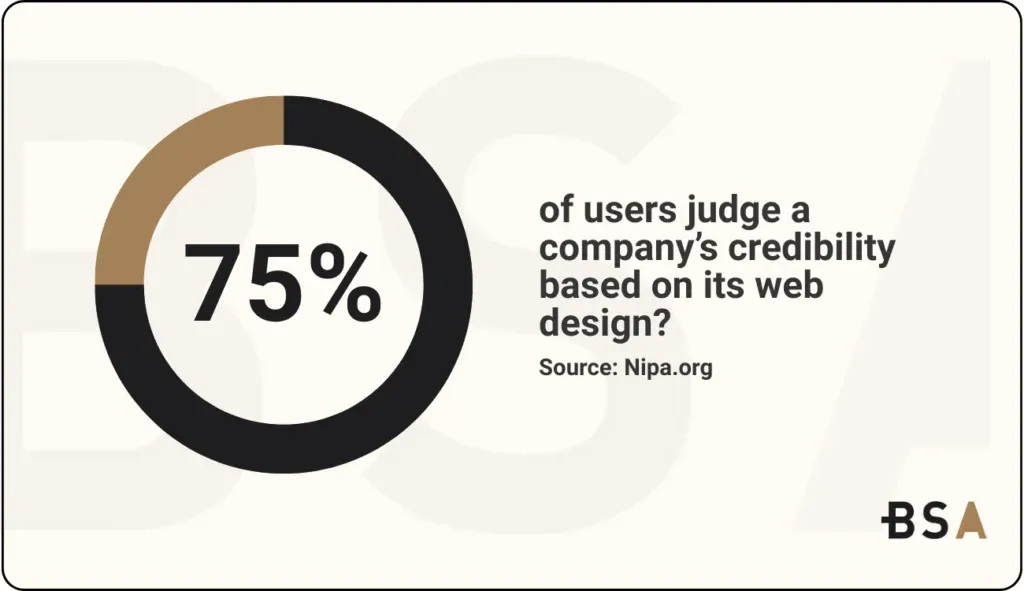
75% of users judge a company’s credibility based on its web design. That’s why most brands, including yours, might be considering a complete website redesign.
But tackling this project purely for aesthetics is one of the worst website redesign mistakes you can make.
A website is not a piece of art; it’s a tool for your business to share its value and products with the world. A website redesign without goals ends up directionless, unfocused, and a huge waste of money.
To help you avoid expensive pitfalls that many brands make, this article will show you and break down 18 of the worst website redesign mistakes you can make and how to completely avoid them.
Looking to redesign your website but don’t know where to start? We can help.
Our Top Pick for the Worst Redesign Mistakes This Year
This list is in no particular order. All of these website redesign mistakes should be taken into account and avoided completely.
1. Redesigning with No Goal in Mind
One of the biggest website redesign mistakes you can make is not knowing why you’re redesigning your website in the first place.
Do you know exactly what you want to redesign and for what purpose?
If you can’t answer this question, then you shouldn’t even consider redesigning your website just yet.
While making your website look prettier is great, if it doesn’t solve your problems, then it’s a waste of money.
That’s why the first thing you should do is identify the issues, learn what needs to get upgraded, and what the redesign needs to do in order to support all of this.
This guarantees that every single design choice, user flow, and element are aligned with your core redesign mission.
Remember, when there is no goal behind it, your website redesign serves no purpose.
Teams can spend hours upon hours replacing components that weren’t broken and ignoring issues that did need attention.
2. Ignoring Existing User Data
Actual user behavior should shape all redesign decisions, not internal guesses.
When businesses redesign based on assumptions only, they can easily remove important high-performing elements, bury essential pages, or introduce other issues altogether.
Instead, what you should do is learn from heatmaps, user sessions, analytics, and conversion data to figure out what actual changes need to be made to bring conversions up. Stats and metrics, not gut feeling, drive online conversion.

And while it might seem like relying on statistics and metrics to redesign your website might put your creativity in a box, it doesn’t at all; instead, it guides it.
A website redesign created based on metrics builds on the strengths of the current experience and doubles down on them. Ignoring data almost always results in a website that looks great but ultimately performs worse than the original.
3. Losing SEO Value During a Redesign
This is one of the biggest website redesign mistakes we see all the time.
Many business websites lose more than 50% of their organic traffic after a poorly managed redesign because SEO is an afterthought.
When someone changes URLs without adding redirects, they delete content, lose metadata, or make internal links disappear, and Google will no longer understand the website as well as before.
Every single redesign strategy should include a fully detailed SEO migration strategy with a clear explanation of what needs to be done throughout the project.
SEO must guide the redesign, not react to it. Before you redesign any page, teams should perform an SEO audit, map every URL, outline redirects, protect content that generates traffic, and preserve internal linking structures.
A website redesign must improve performance without sacrificing visibility.
When you take SEO into account from day one, redesigning becomes a great opportunity to elevate rankings.
4. Rushing and Ignoring the Planning Phase
Companies who are in a hurry to launch quickly can end up cutting a lot of important steps in their website redesign process.
Rushing a website is similar to building a house and not taking the time to create blueprints.
While you might finish and get it built faster, the structural issues will start to show after a bit.
A rushed and unplanned website redesign can lead to a worse website, costly revisions, and in extreme cases, a complete alienation of your clients due to the website delivering a subpar experience.
Planning is what gives structure to a website redesign. It defines how the website will look, its content flow, search strategy, interface patterns, conversion funnels, and long-term scalability.
Skipping planning forces the team to work on the fly, leading them to make decisions too quickly and with little to no clarity. This causes inconsistencies and costly revisions later.
Taking the time to plan ensures that the redesign moves with purpose and precision.
5. Changing Website Structure with No Plan
When it comes to bad website redesign mistakes, this one is high on the list due to how much of an impact a website’s structure can have on your conversions.
A poorly structured redesign often has several issues, such as:
- Hides important pages.
- Adds unnecessary layers of navigation.
- Break user journeys.
- Reduces crawl efficiency.
- Complicates the buyers’ experience.
Every big change to the structure of your website should be made with usability and SEO in mind, not looks.
Remember, website redesigns should only change structure when there is evidence that doing so will improve clarity and navigation. Otherwise, it’s a waste of time and resources.
6. Complicated Design
A lot of website redesign projects fail because they focus on chasing trends instead of improving usability.
Flashy animations, heavy graphics, and experimental and not-yet-proven layouts may look amazing when redesigning the website, but they can frustrate visitors who want a simple website to navigate.
Users want clarity, simplicity, and fast navigation rather than fancy visuals.
When your website redesign becomes more about looking pretty and less about performance and conversions, it more often than not slows load times and creates a bad overall experience for customers.
A good website redesign removes obstacles and guides users’ attention deliberately.
Your true goal with your website redesign should always be to make it as easy as possible for users to navigate your website.
7. Ignoring Mobile Optimization
With around 60% of all web traffic coming from mobile devices, it’s a massive website redesign mistake to prioritize desktop optimization over mobile.
A redesign that ignores mobile usability alienates the majority of today’s users. A mobile-optimized redesign not only improves user experience but also significantly boosts conversion and search rankings.
Explore how we increased Cloud 9’s engagement time by 26.4% with a brand-new web design in our latest case study.
8. Heavy Elements Slowing Website Down
Speed is by far the most important factor in user satisfaction and SEO performance.
Yet many redesigns slow down their websites without even noticing, by adding gigantic videos, massive images, animations, and plugins.
Users don’t need to wait for slow websites anymore because they have dozens of other brands with a similar product or service to yours that they are willing to go to if your website frustrates them.
An exceptional website redesign will have compressed images in a WebP format, clean coding, optimized assets, and lightweight frameworks. Performance always matters more than visuals.
9. Removing Important Content
When redesigning their website, some brands will decide to remove some content because it might feel “too long” or “too outdated” without checking how that content is performing in terms of SEO.
If not careful, they could remove a piece of content, bringing them organic traffic, backlinks, and even potential conversions. Instead of deleting content, try to refine, reorganize, or rewrite.
Every page has value, and a website redesign should enhance content, not erase it altogether.
10. Inconsistent Branding
A redesign aims to enhance your brand identity, not to make it confusing. But many websites end up with mismatched styles, inconsistent visuals, fragmented tone, and disconnected messaging.
Brand consistency is what builds true recognition.
If the new website feels like a completely different company, then loyal clients will start to question credibility and trust.
A website redesign aims to reflect a brand’s personality, mission, and values more clearly than before.
11. Badly Written Content and Copy

Long-winded sentences and passive voice can reportedly slash reading comprehension by 10%.
Images and design tend to get most of the attention during a website redesign, but copy is a big part of what actually persuades users.
When brands treat copywriting as an afterthought in their website redesign strategy, the new website ends up feeling polished but sounding generic and unconvincing.
A website with strong copy should clarify its value, build trust, and differentiate the brand from all the other alternatives on the market. It should also support and improve SEO alongside the things said before.
Design attracts and demands attention, while written content closes the deal. A redesign without brand new copy to accompany it is incomplete.
12. Badly Made and Placed Calls to Action
One of the most common website redesign mistakes we see all the time is brands removing key CTAs or burying them where users won’t be able to see them quickly.
At times, web designers will prioritize aesthetics over CTA visibility and hurt conversions in the process. Other times, teams forget to map out user journeys and rely purely on guesswork.
The main goal of any website redesign is to make it easier, not harder, for users to take action.
Every single page should be easy to navigate and should have a clear next step. Strong CTAs should be visible, intentional, and placed in a way that feels natural in a user’s journey to avoid overwhelming them.
13. Not Doing Proper Tests Before Launch
Launching a website without doing all of the proper testing is by far one of the quickest ways to break a website and have a bad time altogether.
Bugs, broken links, layout issues, mobile problems, loading errors, and form failures are extremely common in redesigned websites.
Before launching a website, you should always go through a quality assurance process to ensure that everything is working as intended.
This process includes:
- Cross-device testing
- Cross-browser testing
- Speed tests
- Form testing
- Accessibility testing
- UX feedback
- SEO audits
Skipping a quality assurance process means that you are letting your potential customers become the testers of mistakes on your website, and that can damage trust instantly.
14. Ignoring Accessibility
Accessibility is not optional anymore; it is essential.
Millions of users all over the world rely on screen readers, captions, keyboard navigation, color-contrast adjustments, and other features that help them interact with websites.
Redesigning your website without caring about accessibility risks several things, such as legal issues, lower SEO rankings, poor usability, and excluding entire groups of users who could become customers.
Accessibility not only improves your website for people with disabilities, but it can also improve the overall experience and clarity for everyone.
By building your website with accessibility in mind, you will have a website that is intuitive, inclusive, and easier to navigate and use.
Learn how we increased Tradewind Markets’ demo requests by 140% with a brand new web design in our most recent case study.
15. Adding Too Many Plugins
Plugins are helpful and essential for every single website, but overreliance on them can often lead to slow speeds, compatibility issues, security risks, and maintenance headaches.
Many website redesign projects start adding way too many tools because they seem “cool” or “helpful,” even when they don’t need them.
Only stick with the plugins that your website needs to use every single week. A streamlined and lightweight website is easier to manage for both security and sustainability.
Every single plugin you add should serve an important purpose while also being secure.
The last thing you want is a security breach due to a badly secured plugin.
16. Not Having a Rollback Plan
Even well-planned website redesigns can encounter technical issues at launch that they didn’t think about.
Without a single backup or rollback strategy, teams may struggle to recover from a major issue that breaks the website entirely.
This can put the brand at risk due to extended downtime, data loss, and a damaged reputation if it happens at launch.
A backup or rollback plan ensures that if any of these issues occur, you’re able to go back to a stable version that still works.
We highly recommend you at least create backups every week for your website in general.
If possible, keep multiple backups with different dates in case you need to roll back to an earlier date.
17. Zero Communication About Your Website Redesign
This is one of the worst website redesign mistakes we see all the time. A website redesign impacts everyone, from your customers to your team.
When big changes like this occur with zero communication, returning visitors will feel confused, and internal teams will become lost and misaligned with what is supposed to happen.
With changes of this magnitude, concerned customers might inundate customer service with questions about why the website changed and why there was no announcement beforehand.
For sales teams, it may mean they lose context on how to market the product, and users may lose trust if things feel unfamiliar or harder to use.
Effective communication smooths the transition. It prepares both teams and clients to adapt to the new experience in a nice and consistent way.
18. Assuming the Redesign is Completely Finished After Launch
A successful redesign is not a one-time event. Websites are always in a state of evolution. User behavior evolves, and technology evolves, so staying on top of this is vital.
After launch, teams must monitor performance, collect feedback, refine content, improve conversion areas, and update features.
Continuous optimization is what keeps a website feeling modern, useful, and aligned with ever-evolving business goals.
Get Your Website Redesigned By Blacksmith Experts
After going through this list of the worst website redesign mistakes you can make, you might have noticed that a lot of them have to do with a lack of planning and knowing your goals from the start.
But we won’t lie to you and say that after you have a goal set, everything will be easier to make.
Redesigning your website is a long project that will take months of planning before it’s live. This is time you could be using on other aspects of your business. So now what?
That’s where we come in. Blacksmith is a professional web redesign agency with a group of professional web designers and developers ready to rebuild your website from the ground up.
We will create the perfect strategy for your website redesign to bring in more clients and improve your conversions.
Still unsure if investing in a website redesign is what your business needs?
Don’t worry, click here to schedule a call with us and we’ll provide you with a free website audit. This way we can show you the areas where your website is losing conversions and how a website redesign could improve it.