





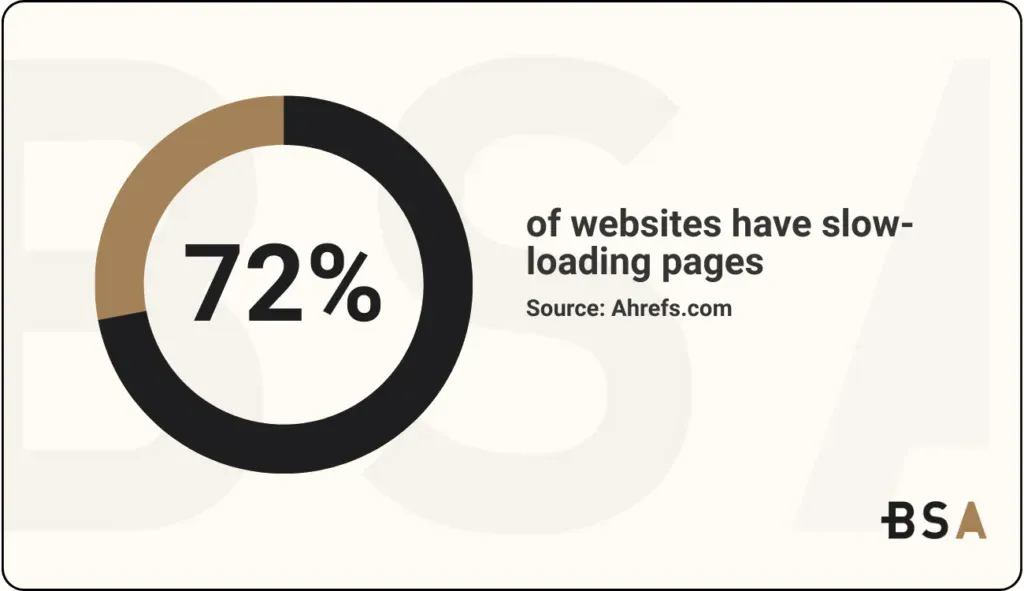
72% of websites have slow-loading pages. This is a number that should worry you, especially when you consider how vital speed is for SEO and your website overall.
Enterprise websites come with their own set of challenges due to their sheer size. Millions of URLs need proper optimization and management.
Such complexity requires a well-laid-out approach beyond standard SEO practices.
Your roadmap to organic search success starts here.
This piece guides you through every step of creating a winning enterprise SEO strategy, from goal setting and team building to technical improvements and results measurement.
Trying to improve your enterprise SEO but don’t know where to start? We can help.
Step 1: Define Your Enterprise SEO Goals and Team Structure
Enterprise SEO success starts with clear objectives and the right team structure. Large websites need coordination between multiple departments that support business priorities.
Identify key stakeholders and departments
Your enterprise SEO strategy’s success largely depends on how well different teams cooperate. SEO affects every aspect of your digital presence, so you need to identify and involve key stakeholders from day one.
Your SEO team should keep direct communication lines with marketing since website content changes directly affect optimization efforts. D
evelopment and IT teams must stay closely involved, especially when technical SEO improvements need coding expertise.
Product teams who know your offerings inside out, content creators who develop your site material, and legal departments that maintain compliance are essential partners; this becomes crucial for multinational enterprises operating under various regulations.
Stakeholder mapping provides a great way to get started. You should understand each department’s specific interests in SEO and customize your message.
Early involvement during planning helps stakeholders feel invested in both the process and the results.
Set measurable SEO goals aligned with business KPIs
Your SEO efforts must connect to measurable business outcomes before you dive into keyword research or technical optimization. These goals should support broader business objectives to show value to stakeholders.
Document your company’s major objectives for the next 12 months first.
Rather than saying “increase online sales,” be specific, like “increase online sales revenue from $2.10 million to $2.80 million by December 31, 2026.”
Business objectives should transform into specific SEO goals using the SMART framework, making them Specific, Measurable, Achievable, Relevant, and Time-bound.
A business goal of 40% revenue growth over three years might translate to these SEO objectives:
- Increasing organic traffic to high-converting product pages by 60%.
- Raising conversion rates for organic visitors from 2.1% to 3.2%.
- Ranking in the top three positions for 25 commercial keywords.
Metric selection matters greatly.
While SEO professionals track keyword rankings and organic traffic, stakeholders often value different metrics.
Business impact metrics should take priority.
- Revenue from organic traffic
- Conversion rate of organic visitors
- Customer acquisition cost
- Return on investment
eCommerce brands typically focus on SEO to drive sales through revenue growth, keyword ranking improvements, conversion rate increases, and brand discovery via unbranded keywords.
“Rankings guide traffic, traffic guides micro-conversions, and micro-conversions guide revenue.
Measure importance in reverse order.” This approach helps prioritize efforts that create real business value instead of vanity metrics.
Regular KPI tracking works best with seasonal trends in mind. Your organic traffic might drop during the summer, or conversion rates could spike during the holidays.
These patterns should factor into your goals to set realistic targets.
Step 2: Conduct a Complete SEO Audit
A complete SEO audit serves as the foundation of any successful enterprise SEO strategy. This review reveals hidden chances and points out key problems that may impact your search visibility.
Large organizations with thousands or millions of pages face complex challenges during this process.
Audit technical SEO and site architecture
Technical SEO is the foundation of your entire search strategy. Your website’s backend needs a check.
This helps find issues that can hurt your search engine rankings. Large-scale websites face unique challenges with crawlability. Search engines give each site a specific crawl budget that determines how often and deeply they explore it.
The first step is to analyze your robots.txt file to find any unintended blocking of important content or resources. Enterprise sites often restrict search engines from accessing CSS, JavaScript, or entire sections through incorrect directives.
Your XML sitemap needs a review next. This vital file helps search engines find and index all your site pages.
Enterprise websites should split their sitemap into separate files for different categories. Each file should stay under 50,000 URLs to avoid crawling issues.

Site architecture is another vital element. A clear, logical structure keeps key content within three clicks of the homepage. This improves the site for users and search engines.
Breadcrumbs and a solid internal linking strategy help users and search engines navigate through your site more effectively. This reduces orphaned pages and spreads link equity throughout.
Page speed needs special attention because slow-loading pages hurt user experience and crawl budget. Search engine bots might reduce crawling frequency when they encounter slow servers.
Google’s Core Web Vitals will help you find areas to improve. Simple fixes, like image compression or URL structure cleanup, can boost rankings.
Assess existing content and keyword gaps
Content assessment shows which areas need improvement or complete updates.
Start with a content inventory by collecting URLs and page information for the web pages in your audit. Track metrics like traffic, engagement rates, and conversions to find content that isn’t performing well.
This data helps categorize content into different groups: missing content, underperforming content, outdated content, and top-performing content. These categories help you focus on the most effective improvements.
A keyword gap analysis comes next to find keywords your competitors rank for but you do not.
This reveals new chances for content creation or optimization. Google Keyword Planner gives a simple overview; just enter your competitors’ domains and check the suggested keywords list.
Each keyword chance needs assessment based on:
- Search volume – enough traffic to justify optimization efforts.
- Keyword difficulty – realistic ranking potential based on your domain authority.
- Intent – matching informational, navigational, commercial, or transactional needs.
This analysis guides your content creation and optimization priorities, showing which topics need immediate attention in your enterprise SEO strategy.
Explore how we reduced Coastal Community Bank’s bounce rate by 16.2% with a brand new SEO strategy in our recent case study.
Study competitors and market trends
A thorough competitor analysis helps you find content gaps, valuable search queries, potential backlink sources, and sets performance standards.
First, identify direct competitors who sell similar products to the same audience and content competitors who attract your ideal customers through information.
Look at competitors’ websites for user experience and technical aspects. Check their site speed, mobile responsiveness, and overall usability.
This technical comparison shows where you can gain an edge through better technical performance.
Look at how competitors organize and publish content. Check their best-performing formats, blog posts, guides, comparison pages, or interactive tools.
Find out which formats get the most search traffic, backlinks, and engagement. This knowledge helps you prioritize content types that will work in your niche.
The final step is to study competitors’ backlink profiles to find link-building opportunities. Quality and relevancy matter more than quantity now.
Focus on getting authoritative, niche-specific backlinks that show search engines your topical expertise.
Enterprise websites need a systematic yet flexible audit process that fits their business context.
Regular technical SEO checks are vital; the web changes fast, and consistent assessment helps you stay ahead of algorithm updates and competitor moves.
Step 3: Build Your Enterprise SEO Content Strategy
Your enterprise SEO financial success depends on a solid content strategy. Large organizations need to coordinate content across multiple departments and product lines at scale.
The numbers speak for themselves; companies that blog see an average of 126% higher lead growth.
Map content to the buyer experience
You need to understand how people interact with your brand during their purchase process.
The buyer’s experience has three main stages:
- Awareness Stage: Prospects know they have a problem but haven’t found solutions.
- Consideration Stage: Prospects research ways to solve their defined problem.
- Decision Stage: Prospects are ready to buy.
Your content needs to do the heavy lifting at each funnel stage. Educational blog posts work best for awareness, comparison guides help with consideration, and case studies drive decisions.
Use content clusters and internal linking
Topic clusters make a significant difference in enterprise SEO content strategies. This model puts a central pillar page at the core, with related subtopics as cluster content.
Search engines can better understand how your content pieces connect, which builds your site’s authority on specific topics.
A well-laid-out internal linking strategy connects your website effectively. Each cluster page should link to its pillar page and vice versa.
This tells search engines that the pillar page is the main source of information on that topic.

Internal linking becomes vital for enterprise websites with thousands or millions of pages. Your high-performing pages should link to ones that need more visibility. This passes authority between pages. Clear, keyword-rich anchor text improves contextual relevance and describes the destination page better.
Add branded and competitor keyword targeting
Branded keywords show high intent. People searching for your company name or products are usually closer to buying. Google Search Console helps you find these keywords and create content that matches what your audience wants.
Analyzing your competitors’ branded keywords reveals their search presence and advertising tactics.
Understanding the keywords that drive traffic to competitor sites helps you adjust your strategy to capture that traffic.
The competitor keyword analysis should focus on topics where your rivals rank but you do not. This shows new opportunities to create or optimize content.
Conductor’s Explorer feature tracks competitor keyword rankings over time. This helps you spot areas where you can outperform them.
Use enterprise SEO content strategy platforms
Enterprise SEO platforms give you one place to research, implement, optimize, and measure your search engine presence.
Look for these key features:
- Rank tracking with unlimited keywords and competitive comparisons.
- Detailed keyword research datasets.
- Integrated AI-driven content workflows.
- Strong SEO reporting capabilities.
- Advanced technical SEO features.
- Detailed competitor insights.
seoClarity optimizes content based on top-ranking pages and relevant terms. BrightEdge uses AI to suggest content ideas and help with keyword research.
Global enterprises should pick tools that support multiple languages in rank tracking. This enables tracking across different regions effectively.
Step 4: Implement Technical SEO Improvements
Technical optimization is the backbone of your enterprise SEO strategy.
Large sites with thousands or millions of pages need technical improvements as a foundation to rank properly.
Fix crawl errors and improve site speed
Search engines can’t access your website’s pages when crawlability problems exist. These pages become invisible in search results.
Server errors, like 500 HTTP status codes, break the crawling process and waste valuable crawl budgets. Complex architectures in enterprise sites make these problems multiply quickly.
Google Search Console’s crawl stats help identify patterns of 5XX errors that point to server issues.
Your next step should focus on redirect chains – multiple redirects connected together that slow down users and search engines. Loading time increases with each redirect, while link equity gets diluted across your site.
Site speed is a vital ranking factor that affects user experience and crawl efficiency.
Studies show 53% of mobile users leave sites that take more than 3 seconds to load.
The quickest way to improve speed includes:
- Optimizing images through proper sizing and compression.
- Minimizing HTTP requests by consolidating code files.
- Implementing browser HTTP caching to reduce reload time.
- Removing unnecessary render-blocking JavaScript.
Content delivery networks (CDNs) benefit large websites by caching web content worldwide.
Users can access your site quickly, whatever their location. This strategy improves user experience and helps search engines direct users through your site more efficiently.
Use hreflang and localization for global SEO
Multinational enterprises need hreflang tags. These tags tell search engines which language and geographic version of content users should see based on their location and priorities.
Poor implementation means users in Mexico might see content meant for Spain, resulting in a bad user experience and missed conversions.
Hreflang offers three main implementation methods:
- HTML head section tags
- HTTP headers for PDFs and non-HTML resources
- XML sitemap implementation (ideal for large websites)
XML sitemap implementation needs each URL element to include all alternate versions of the page, plus the page itself.
Search engines understand the connection between different language versions through this reciprocal linking pattern.
Successful global SEO needs more than hreflang.
Each international page should have its own URL with self-referencing canonicals. Avoid IP address-based auto-redirects. They prevent search engines from accessing all content.
Quality translation is key. Metadata and navigation elements need careful translation. Automated versions can confuse users.
Ensure mobile-friendliness and accessibility
Enterprise sites should start mobile optimization with responsive design that fits different screen sizes. This eliminates duplicate content issues from separate mobile sites. T
he core team should create simple, clear navigation with touch-friendly elements spaced well. The “fat finger” principle suggests buttons and links need proper sizing and positioning to prevent accidental clicks during scrolling.
Accessibility and SEO now join together, with WCAG 2.1 Level AA becoming the expected standard. Screen-reader users and Google both benefit from well-structured HTML. SEO gets a boost from these key accessibility elements:
- Semantic HTML tags like <nav>, <section>, and <article>
- Logical heading hierarchy (H1, H2, H3).
- Descriptive link texts and alt attributes for images.
These elements serve two purposes: they guide users with disabilities while creating a clear content structure for search engines.
Mobile usability and accessibility need constant review. Google’s Mobile-Friendly Test shows how your site performs on smaller screens. Accessibility testing tools help spot potential barriers for users with disabilities.
Step 5: Scale With Automation and Tools
Your enterprise SEO success depends on scaling operations once you have your strategy basics in place.
Websites with thousands or millions of pages need automation since manual processes can’t handle the workload.
Use programmatic SEO for large-scale content
Programmatic SEO helps you tackle scale challenges through templates and structured data that generate optimized pages for specific search queries. This approach is a great way to get results when creating pages manually isn’t practical.
The method works best for creating location pages, product variations, integration pages, and comparison content.
Companies can attract search traffic through thousands of keyword variations without spending resources on individual pages.

To implement this, create strong page templates that balance automation with customization.
Build a database using Google Sheets or Airtable to store all dynamic elements needed for each page variation. The quality of your database will make or break your success.
Learn how we improved Blue Fin Group’s backlink growth by 108% with a new SEO strategy in our latest case study.
Automate reporting and monitoring
Enterprise SEO teams need to avoid manual busywork. Regular automated audits help find crawl errors, broken links, duplicate content, and slow loading speeds.
Tools like Screaming Frog, Smart SEO Highlighter, and Google Search Console spot technical problems that hurt visibility.
You need solutions that remove manual tracking for reporting.
Looker Studio lets you combine different data sources into customized SEO dashboards for yourself or clients. These dashboards can use brand colors and logos while giving stakeholders access to up-to-the-minute metrics.

The right monitoring setup shows both big-picture insights and detailed performance data. Set up analytics to deliver useful information at scale by using template-level tagging to combine data by content type.
Choose the right enterprise SEO tools
The right enterprise SEO platforms are the foundation for scalability and growth. Look for tools with automation features for technical SEO tasks like site audits and bulk content optimization.
Top enterprise solutions include Botify for robust crawling and detailed site audit reports, BrightEdge for AI-powered content recommendations and historical data, and seoClarity for optimization suggestions and team collaboration.
The best enterprise tools use machine learning and AI to automate complex tasks. This saves time and resources for strategic work.
Note that automation doesn’t replace SEO professionals; it lets them focus on high-impact strategies like content planning and competitive analysis.
Step 6: Monitor, Report, and Refine Your Strategy
Your enterprise SEO strategy’s success depends on careful tracking of performance.
Regular measurement helps you spot trends and shows stakeholders the value of your work.
Track performance with GA4 and GSC
Google Analytics 4 helps you understand how users interact with your website after finding it through search.
GA4 uses an event-based model to track every interaction. It records clicks, scrolls, and video views to give you detailed information about user experiences.
Link Google Search Console with GA4 and go to Reports > Search Console > Queries to see detailed keyword data. This connection shows which search queries bring traffic and how your content ranks in search results.
These insights help you make better content decisions.
Your SEO performance tracking should focus on:
- Organic traffic trends and engagement rates.
- Conversion rates from organic visitors.
- Path exploration reports show how organic visitors move through your site.
- Device category breakdowns for organic search traffic.
Google Search Console adds technical insights through tools that measure search traffic, fix problems, and improve visibility.
The URL Inspection tool gives you detailed crawl and index information from Google’s index to help fix ranking issues fast.
Set up dashboards for stakeholders
Good SEO dashboards turn complex data into clear, applicable information that speeds up decision-making.
Start each dashboard with an executive summary that shows key metrics and recommendations.
This approach helps SEO insights reach leadership discussions.
Different teams need different metrics in their reports.
- C-level executives want conversion data, yearly traffic growth, and organic traffic compared to other channels.
- Development teams need speed reports, index coverage issues, and technical SEO tasks.
- Digital PR teams look for branded traffic, new links, and article performance.
- Customer support needs internal site search data to spot user problems.
Monthly reports show quick progress updates. Quarterly reports work better for strategic reviews, especially in large organizations where changes take time. Schedule these reviews with other business meetings to maximize their effect.
Refine based on data and feedback
Watching your metrics helps keep your strategy on track. Look at traffic, click-through rates, keyword rankings, and conversion rates.
Sometimes metrics might look wrong at first glance. Adding consent banners or filtering out low-quality traffic might cause temporary drops but lead to better results. Always link your data to business goals for accurate context.
Good communication helps refine your strategy. Meet regularly with stakeholders to review performance, share ideas, and get feedback. This keeps everyone moving in the same direction as your strategy grows.
Strong governance needs consistent processes. Create clear training materials and documentation to keep standards high. Search algorithms and markets change often.
Your quick response to performance data becomes your edge in enterprise SEO.
Develop a Custom Enterprise SEO Strategy With Blacksmith
Enterprise SEO is more than just a marketing tactic; it is a key driver of business growth. Your organization can turn organic search into a lasting competitive edge by following a six-step strategy.
But we will be honest with you; creating an enterprise SEO strategy from scratch takes months of planning and work. This is time you could use on other aspects of your business. So what now?
That’s where we come in. Blacksmith is a professional SEO company with a group of seasoned digital marketers ready to create and execute the perfect enterprise SEO strategy for your business.
Still unsure if a brand-new enterprise SEO strategy is what your business needs? Don’t worry, click here to schedule a call with us and we will provide you with a full website audit. This way we can show you the areas of your website where your SEO strategy might be falling short and how we can help you improve it.