


From the morning rush on the ‘L’ to the weekend foot traffic in Wicker Park, Chicago is a city that is constantly in motion. And in 2026, this mobility has fundamentally changed how business is done.
If you are a Chicago business owner, you likely already know that your customers are browsing on their phones as they move around rather than on a desktop. But are you aware of just how deep that behavior goes?
Recent data reveals that mobile commerce (m-commerce) now accounts for over half of all global ecommerce sales. For a local brand, this means your digital store is being accessed on a 6-inch screen in your customer’s pocket. Clearly, the days of simply having a responsive site are over.
To dominate the local market in 2026, you must actively leverage specific mobile ecommerce trends that align with the on-the-go lifestyle of the city.
Key Takeaways
- Chicago’s market is ultra-saturated, with over 12,000 active eCommerce stores fighting for attention, making a passive website strategy a recipe for invisibility in 2026.
- Social-first discovery has replaced traditional search, with local competitors using Instagram and TikTok to turn casual scrolling into immediate sales.
- Friction is the primary killer of mobile revenue, requiring brands to integrate one-tap digital wallets to ease decision-making
- Vertical video outperforms static photography by providing the immersive, high-energy experience that 2026 consumers expect on their handheld devices.
- Optimizing for AI Shopping Agents via AEO (Answer Engine Optimization) is now as critical as traditional SEO.
- The Phygital loop (BOPIS) allows Chicago brands to leverage local proximity to beat the shipping speeds of national giants.
- In-app checkouts reduce bounce risk by allowing users to complete a purchase without ever leaving their social feed.
- First-party data via SMS and loyalty apps has become the only reliable way to maintain a direct, high-value relationship with your customers.
Chicago eCommerce Statistics
Before we look at the trends, we need to look at the numbers to really understand the market. In recent times, the bar for digital entry in Chicago has been raised significantly.
Today, over 12,000 active eCommerce stores are headquartered here. Shopify leads the charge with nearly 8,500 local shops, followed closely by Wix, Squarespace, and WooCommerce.
This density creates a massive problem: saturation. With so many local options, Chicago brands can no longer wait for customers to find their website on Google. To survive, they have to go where the attention already is.
This is why the biggest shift in local commerce in the city is the move to social-first selling. It is no coincidence that 85% of local Squarespace users are already on Instagram; they know that in a saturated market, the only way to win is to sell directly in the feed.
According to Fabianna Lopez, Marketing Lead at Blacksmith Agency:
“The density of high-performing eCommerce sites in Chicago means that being good enough is no longer a strategy. When 10,000+ local competitors are already optimized for mobile-first discovery, you must go a step further to make it easy for these customers to find you and to buy from you in the few seconds they have while multitasking on their mobile.”
Want to optimize your website for mobile-first secrtity? Let’s chat about requirements.
Top 12 Mobile eCommerce Trends Chicago Brands Must Watch
So how are the leading brands in Chicago doing it? How are they separating themselves from the crowd and getting more visible? They treat mobile as their primary point of contact rather than a secondary thought.
As experts, here are 12 critical mobile ecommerce trends that we’ve seen to be useful in helping brands remain at the forefront of consumer innovation.
1. Hyper-Local Geofencing for the “L” Commuter
Chicago has one of the most robust transit systems in the country, creating a unique opportunity for mobile advertisers. In 2026, brands are using hyperlocal geofencing to target commuters, specifically when they are passing through certain transit hubs or neighborhoods.
Imagine a user browsing their phone while waiting at the Clark/Lake station. A coffee shop in the Loop can trigger a mobile ad offering a discount that is valid only for the next hour.
This “right place, right time” strategy is one of the most effective mobile ecommerce trends available, moving beyond broad city-wide targeting to focus on the exact physical context of the user.
2. TikTok Shop and Discovery Commerce.
Traditional eCommerce is search-driven. When a customer realizes they need a new winter coat, they will visit Google or Amazon and type in “heavy winter parka.” In this model, the customer is the hunter, and the product is the prey.
However, platforms like TikTok have evolved into massive search engines with a trend known as Discovery Commerce.
As a strategy, Discovery Commerce flips this script entirely. It is a system where the product finds the customer. By leveraging advanced machine learning and behavioral data, platforms like TikTok anticipate what a user might want before the user even knows they want it.
With TikTok Shop sales forecast to exceed $20 billion in the U.S. in 2026, the platform is a massive opportunity to reach local and national audiences without waiting for them to search for you.
3. Vertical Video Storefronts
Phones are built vertically, and in 2026, the way we consume commerce will follow suit. With global livestream sales projected to exceed $1 trillion this year, Chicago brands are moving away from static, flat photography and toward real, vertical videos (9:16). This aligns with 2026 branding trends that favor motion over static content.
Leading Chicago retailers are also embracing merchant-led livestreams, where they can interact with customers in real-time, answering questions about fit or color while the viewer is on their lunch break.
For a local brand, this means your product detail pages (PDPs) should look more like a TikTok feed than a traditional catalog. Short, 10-second clips showing the texture of a fabric or the unboxing experience of a beauty product drive significantly higher conversion than a gallery of five static images.
With such an approach, your Chicago brand is likely to see an upsurge in engagement and, by extension, sales.
4. One-Tap Digital Wallets
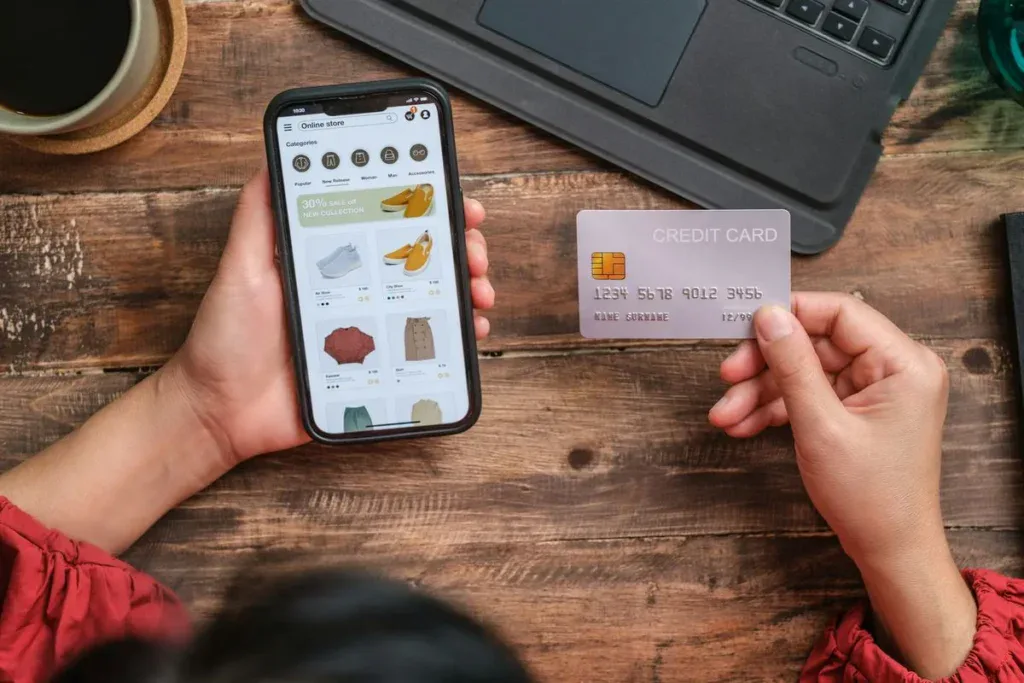
Friction is the ultimate killer of mobile sales. In 2026, mobile commerce represents 60% of all global e-commerce, yet the gap between browsing and buying remains a challenge. Nothing kills a sale faster than a customer having to dig for a physical credit card while walking through a crowded terminal or standing on a moving train.
If your checkout process requires more than a thumbprint or a face scan, you are essentially handing your customer over to a competitor who makes it easier.
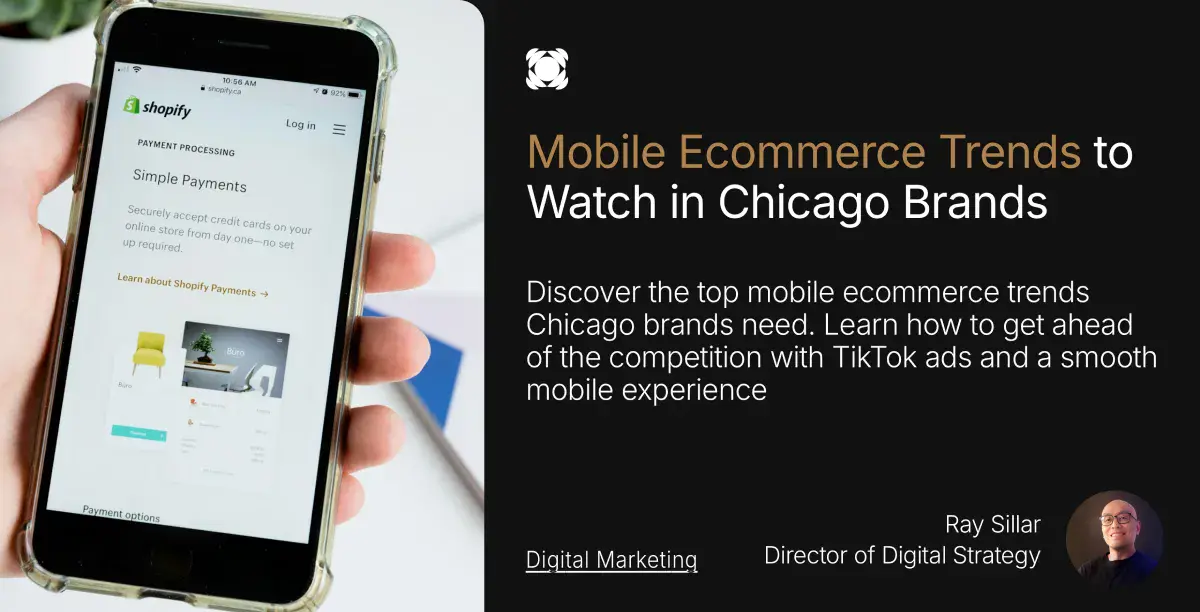
Digital wallets like Apple Pay, Google Pay, and Shop Pay have moved from being nice-to-have features to essential ecommerce tools. With over 5.3 billion digital wallet users globally this year, the expectation is a one-tap experience.
These systems don’t just speed up the payment process; they increase trust by using biometric security, ensuring that sensitive data is never shared directly with the merchant. For a Chicago business, implementing a wallet-first checkout is the simplest way to get the sales that happen during those small windows of downtime in a consumer’s day.
5. AI Shopping Agents
In a city as dense as Chicago, being visible to AI agents is now just as important as being visible to human eyes. Why? Because customers are now delegating their shopping to AI tools like ChatGPT, Gemini, or even personal shopping agents.
Recent data shows that 73% of consumers now use AI at some point in their shopping journey, often asking for complex outcomes rather than searching for specific products.
Instead of searching for “best hiking boots,” a user might tell their AI, “Find me a pair of waterproof boots under $150 available for pickup today in Lincoln Park.”
Your goal is to be the first recommendation an AI gives when a multitasking customer asks for a local solution. And for that to happen, you need to move beyond SEO and master Answer Engine Optimization (AEO).
This means your website’s data must be perfectly structured and machine-readable so that AI agents can verify your price, inventory, and specific product attributes in milliseconds. If your data is messy, the AI agent will simply skip your store in favor of a competitor with a cleaner feed.
Learn how we increased Clear’s conversion rate by 17.9% with a new web design strategy.
6. The Phygital Experience (BOPIS)
The line between online and offline has completely blurred. Chicagoans value their time above all else, which is why Buy Online, Pickup In-Store (BOPIS) and curbside pickup have become mandatory capabilities for local retailers.
This phygital strategy combines the ease of mobile browsing with the instant gratification of physical retail. Statistics show that 71% of consumers now prefer contactless, unified shopping experiences where their digital wish list can be accessed or fulfilled the moment they walk into a physical storefront.
Leading local retailers are using mobile apps to coordinate curbside pickups perfectly. Using GPS data, the store knows exactly when the customer pulls up, allowing staff to run the order out immediately. The customer gets the item faster than Amazon can deliver it, and you get the foot traffic while your sales go up.
7. Social Commerce & In-App Checkout
Following the lead of TikTok, platforms like Instagram and YouTube have aggressively integrated shopping carts. The dominant trend for 2026 is seamless in-app checkout, meaning the user never leaves the social media platform to complete a purchase.
This is one of the most important mobile ecommerce trends for capturing impulse buyers in Chicago. Every second spent waiting for an external website to load is a second where a customer can lose interest.
By allowing customers to check out directly on the ecommerce website where they discovered your product, you eliminate the risk of slow loading times killing the sale. This shift isn’t just about convenience; it’s about shortening the distance between discovery and ownership in a high-speed urban environment.
8. Augmented Reality (AR) Try-Ons
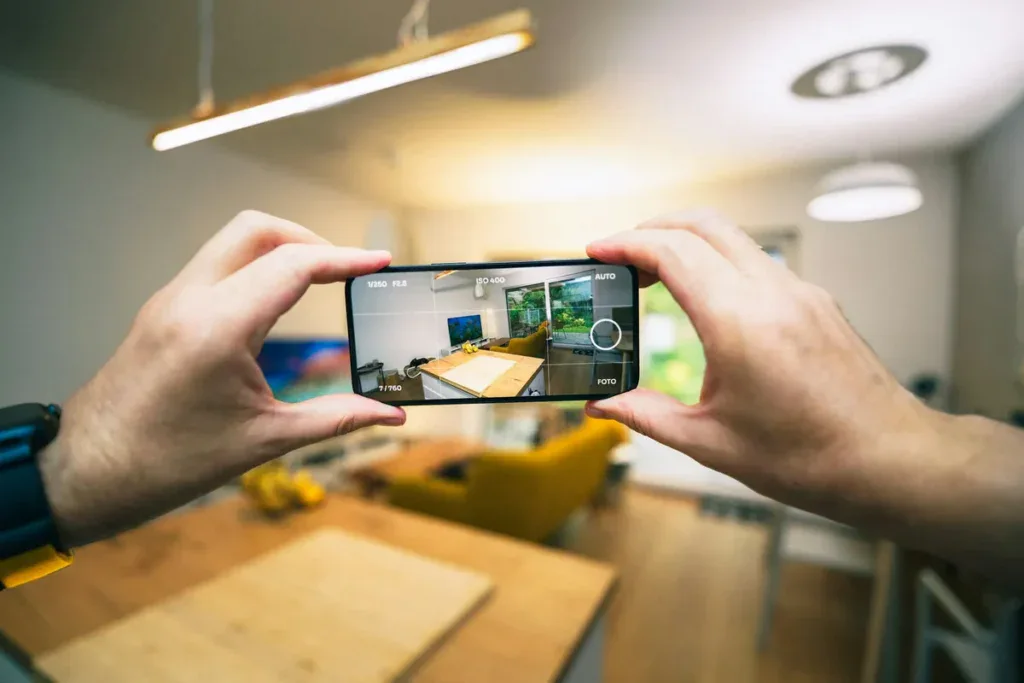
Returns are a massive cost center for ecommerce, but in 2026, Augmented Reality (AR) has become the mobile solution to this problem.
With the advanced cameras on modern smartphones, the fitting room now lives in the customer’s pocket. Users can now virtually place furniture in their Chicago apartment to check the dimensions or try on a pair of glasses to see how they fit their face, all through their mobile screen.
This technology bridges the final gap between the online and offline worlds. It gives the mobile shopper the confidence of a physical shopping experience without the hassle of traveling to a store.
For local merchants, implementing AR is one of the most technically advanced mobile ecommerce trends that significantly reduces return rates and improves customer satisfaction.
9. Voice Search Optimization
As mobile users increasingly rely on voice commands while driving or walking through the city, voice search optimization has moved from a niche tactic to a core pillar of mobile-first ecommerce strategies..
Queries like “Open restaurants near me” or “Same-day flower delivery Chicago” are highly specific and carry immediate intent. In 2026, voice search accounts for a significant portion of local commerce traffic, yet many brands still optimize for typed keywords rather than spoken questions.
To capture this high-intent traffic, your mobile content must become conversational. Your content should answer the questions people ask directly and clearly, mirroring the natural language people use when speaking to Siri, Alexa, or Gemini.
Capturing intent the moment it is spoken allows your brand to become the immediate solution for a customer on the move, effectively separating you from competitors who are still targeting typed keywords.
10. SMS Marketing & Push Notifications
While email open rates continue to decline, SMS read rates remain near 98%. This particular mobile ecommerce trend is so powerful because it bypasses the crowded social feed and the cluttered email inbox. It then delivers your most important message directly to the lock screen, where it can’t be ignored.
Because people carry their phones everywhere, a well-timed text message is the most direct line of communication you have with your audience. However, because this channel is so personal, it must be treated with extreme respect.
The most successful Chicago brands use push notifications and SMS only for high-value, time-sensitive alerts. When used correctly, these notifications keep your brand top-of-mind and literally in the palm of your customer’s hand.
11. Sustainability & Ethical Transparency
The modern mobile shopper in 2026 is more conscious of their environmental footprint than ever before. For Chicago brands, this shift in consumer behavior means that transparency is now a powerful conversion tool.
When a customer can see at a glance that their purchase aligns with their values, the friction of the buying decision decreases.
Transparency also extends to the supply chain. Mobile interfaces that allow users to easily trace the origin of a product or opt for “Green Shipping” at checkout build immediate rapport. This trend is particularly strong among younger demographics in the city who prioritize ethical consumption.
By integrating these details into your mobile experience, you aren’t just following mobile ecommerce trends; you are building long-term brand equity.
12. Data Privacy & First-Party Data
With the end of third-party cookies, owning your audience data has become the only way to ensure long-term growth. That’s why more Chicago businesses are building their own first-party data engines through mobile apps and loyalty programs.
Instead of relying on Big Tech to find your customers, you are creating a direct line of communication that you own. By offering a value-added mobile app, you turn a one-time shopper into a lifelong advocate.
Maintaining this direct relationship is much easier when you prioritize security. When users feel their data is safe, they are more likely to share their preferences, allowing you to provide the personalized experiences that define current mobile ecommerce trends.
This direct data loop allows you to spend your marketing budget more effectively, targeting people who have already raised their hand and said they love what you do.
How Blacksmith Agency Accelerates Your Mobile Growth
Understanding these mobile ecommerce trends is one thing. Executing them is quite another.
At Blacksmith Agency, we specialize in turning mobile traffic into predictable revenue. While we are known for our high-end development, we also operate as a premier TikTok Ads Agency. We know that today, growth is driven by vertical video, creator-led content, and a seamless path to purchase.
We help Chicago brands scale by:
- Creating high-converting TikTok creatives that feel native to the feed and stop the scroll.
- Structuring product data for AI discovery, voice search, and social shops.
- Optimizing mobile journeys to eliminate friction, boost ROAS, and increase lifetime value.
Don’t let the mobile revolution leave your brand behind. Partner with an agency that knows how to turn a social scroll into a local success story.