




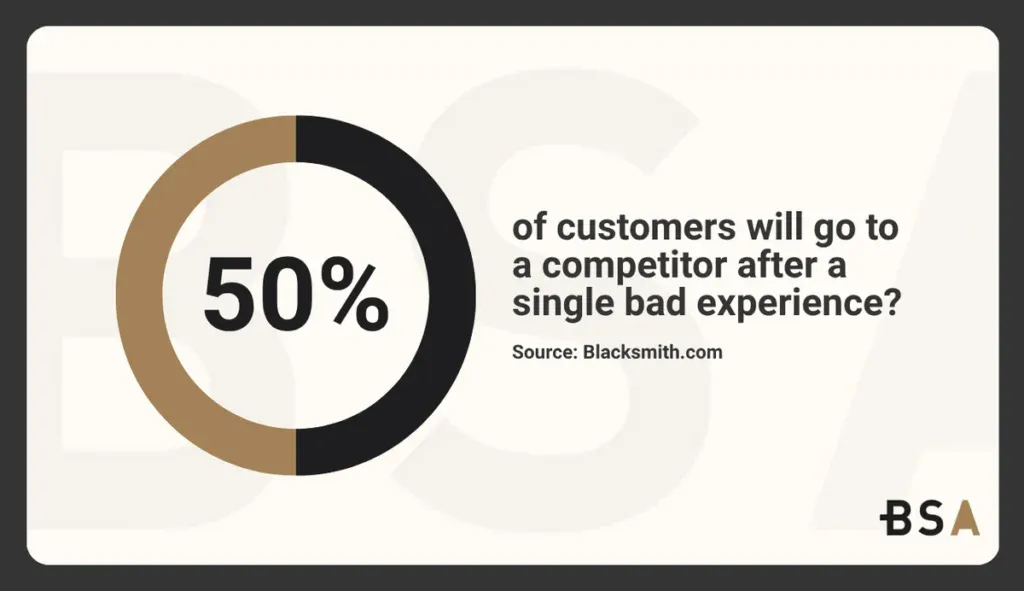
Did you know that 50% of customers will go to a competitor after a single bad experience?
HIPAA compliance in healthcare web design isn’t just another technical checkbox, it serves as the most important safeguard to protect both patients and healthcare firms worldwide.
Employee negligence and failure to follow HIPAA regulations cause more PHI breaches than external hacking. A HIPAA-compliant website protects sensitive patient information and provides legal protection for your organization.
This article walks you through everything in HIPAA-compliant web design. You’ll learn about technical requirements, safeguards, implementation steps, and compliance monitoring.
Trying to improve your healthcare web design but don’t know where to start? Let us help you.
Why HIPAA Compliance Matters in Web Design
HIPAA compliance in healthcare web design does more than just follow regulations; it serves as the foundation of patient care in the digital world.
A clear understanding of these standards helps create websites that protect both patients and providers.
Patient trust and digital privacy expectations
Patients take a leap of faith when they share health information online. They trust their privacy will remain protected.
Studies show patients disclose more detailed health information when they believe their data stays confidential. This leads to better-informed decisions and more accurate diagnoses.
However, patients who worry about privacy often hold back information or skip healthcare visits completely.
The doctor-patient relationship has changed a lot since medical records moved from locked cabinets to electronic systems.
Healthcare websites must now show clear privacy practices that give visitors confidence about their data protection.
Legal risks of noncompliant websites
HIPAA violations can lead to harsh financial penalties. Fines can range from $100 to $50,000 per violation, with annual costs reaching $1.5 million for each violation category. These expenses add up quickly, especially with multiple or repeated violations.
Impact on brand reputation and patient retention
Healthcare faces the highest customer loss rate after data breaches at 6.7%. More than financial services (6.1%) and education (2.7%). This exodus hits revenue hard because rebuilding patient trust proves extremely difficult.
These breaches hurt more than just business metrics; they cause real harm to patients.
Many face identity theft, discrimination, money problems, stigma, or emotional distress from privacy violations. Such experiences can permanently damage their trust in healthcare.

Patients become reluctant to share crucial health details once trust breaks down. They use online services less.
Quality care needs complete information, so this hesitation affects treatment success and clinical outcomes directly.
Core Technical Requirements for a HIPAA-Compliant Website
Healthcare websites must protect patient information through specific technical safeguards.
Your website needs these core requirements to meet security standards.
SSL/TLS Encryption for Data in Transit
HIPAA compliance requires secure data transmission between users and websites.
Healthcare websites must implement SSL/TLS encryption certificates and switch from HTTP to HTTPS protocol. This protocol keeps all information encrypted between client devices and servers to prevent unauthorized access.
Healthcare websites must use the HTTPS protocol when handling protected health information (PHI).
The encryption provides:
- Secure encrypted communication between your website and browsers.
- Website identity verification through trusted Certificate Authority signatures.
- Data integrity protection uses encrypted hashes that detect changes.
You should invest in High Assurance (OV) or Extended Validation (EV) certificates. These certificates give users better proof of your organization’s identity.
Access Control via Role-Based Permissions
The HIPAA Security Rule states that only authorized staff can access electronic PHI (ePHI).
Technical safeguards must include policies that limit system access based on job roles.
Role-based access control needs:
- Unique user identification – Staff members must have their own login credentials for access tracking.
- Minimum necessary standard – Staff access should be limited to essential job function data.
- Authorization based on roles – Nurses might see patient records but not billing details.
Multi-factor authentication adds security by requiring multiple verification methods.
Users need a password plus a fingerprint or PIN, which reduces the risk of unauthorized access.
Audit Logging and Session Timeout Configuration
HIPAA requires systems to record and track activity containing ePHI. Audit logs must record:
- User logins and login attempts.
- Database changes and additions.
- File access by users.
- Operating system logins.
Organizations must keep these logs for at least six years in tamper-proof format. Good audit logging helps establish normal patterns and quickly spots potential breaches.
Session timeout rules help prevent unauthorized access to unattended devices. Systems should log out inactive users automatically.
Timeout durations can be adjusted based on risk levels and how people use the system.
Data Encryption at Rest in Hosting Environments
HIPAA requires protection for stored information beyond data in transit.
The encryption requirements include methods to encrypt and decrypt ePHI.

Stored data (data at rest) encryption should follow NIST Special Publication 800-111 standards. Good solutions include:
- Full disk encryption (FDE) with BitLocker (Windows) or FileVault (Mac).
- File-level encryption tools like WinZip Enterprise.
HIPAA-compliant servers need end-to-end encryption (E2EE) to protect both stored and moving data. NIST standards guide proper data disposal methods when information is no longer needed.
These technical requirements create the foundation for website HIPAA compliance and protect patients and healthcare organizations from security breaches.
Explore how we reduced Deep 6 AI’s bounce rate by 21% with a brand new web design in our latest case study.
Administrative and Physical Safeguards for Web Infrastructure
Physical and administrative measures work alongside technical safeguards to keep your website HIPAA compliant. Your web infrastructure needs protection from both digital and physical threats through these safeguards.
HIPAA-Compliant Hosting Provider Selection
The right hosting provider serves as the lifeblood of HIPAA compliance for healthcare websites. Cloud Service Providers (CSPs) must follow HIPAA rules as business associates if they handle protected health information (PHI).
Your potential host should provide these critical elements:
- Private firewall services with virtual private networks.
- Server segregation (production servers separate from database and web servers).
- Offsite backup capabilities and disaster recovery methods.
- Encryption for data at rest and in transit.
- Private IP addresses.
- Operating system patch management.
- Multi-factor authentication.
Large public clouds like AWS and Azure support compliance but can’t guarantee it since no cloud platform comes HIPAA-compliant out of the box.
You should verify your provider’s third-party audits such as SSAE 18 SOC examinations.
Business Associate Agreements (BAAs) with Vendors
HHS guidelines require a Business Associate Agreement before vendors can access, transmit, or store PHI. Cloud hosts need BAAs even if they only handle encrypted health records without decryption keys.
BAAs create accountability chains, and covered entities must verify their vendors’ compliance. Vendors should protect cloud-transmitted data, ensure secure storage, manage access, and keep detailed activity logs.
Physical Access Controls for On-Premise Servers
The HIPAA Security Rule demands four essential physical protection measures to shield electronic PHI systems from unauthorized access and natural hazards.
Facility access controls come first. They restrict entry while allowing authorized personnel to work. Entry logs and limited data center access are crucial.
A comprehensive facility security plan protects equipment from tampering and theft. Security cameras, alarm systems, ID badges, and biometric systems help achieve this goal.
Role-based access control procedures guide individual access rights. These procedures cover visitor management and equipment monitoring protocols.
Maintenance records should document all physical security changes. This includes repairs to walls, doors, and locks.
On-premise servers need controlled building entry points, biometric access, immediate access tracking, and well-placed security cameras.
Steps to Build and Maintain a HIPAA-Compliant Website
Healthcare websites need specific security measures to work properly.
Let me show you the steps to build and maintain a HIPAA-compliant website.
Conducting a Website Risk Assessment
Security starts with a full picture of your healthcare website’s risks. The HIPAA Security Rule requires an “accurate and thorough assessment of potential risks and vulnerabilities” to protected health information (PHI). Your assessment should cover:
- All ePHI locations in your system.
- External ePHI source documentation.
- Human, natural, and environmental threat evaluation.
- Current security measures, review and setup checks.
You should document and update your risk analysis regularly. These original steps are the foundation for protecting patient information with the right security measures.
Implementing Secure Contact Forms and Portals
Basic forms can expose sensitive data to unauthorized users. Your forms need encryption tools like HTTPS to protect data between user browsers and your server.
Start by checking your site’s SSL certificate that encrypts connections. Then add HIPAA-compliant forms that encrypt and store submitted data safely.
Only collect data you really need. You might want to add CAPTCHAs to stop automated bots from sending spam or harmful content.
Disabling Non-Compliant Third-Party Plugins
Extra plugins take up disk space, slow down backups, and create security risks.
Here’s how to remove them safely:
- Back up your entire website.
- Turn off the plugin in your admin panel.
- Test your site to make sure everything runs right.
- Remove the plugin completely from your server.
Take out plugins one at a time and check your site after each removal to spot problems quickly.
Regular Security Updates and Patch Management
Patches remove weak spots that hackers try to exploit. Each update makes your healthcare website stronger against attacks.
You need a system for:
- Watching for needed software updates from one place.
- Setting up regular patch schedules (usually every six months).
- Keeping records of updates and results.
Track how well patches work by measuring the percentage of successfully updated endpoints.
Creating a HIPAA-Compliant Privacy Policy Page
Your website needs a clear privacy policy that explains how you protect PHI. This policy should explain your data breach response and compliance methods. Some states require users to opt in before you collect their sensitive data.
Put this policy where users can easily find it on every page of your healthcare website.
Training and Monitoring for Ongoing HIPAA Website Compliance
Your healthcare website’s HIPAA compliance relies on effective staff training and continuous monitoring. Regular vigilance will give your healthcare website protection against new threats.
Staff Training on ePHI Handling via Web Interfaces
The HIPAA Security Rule requires training for staff members who handle protected health information. Your staff needs to understand their responsibilities to safeguard patient data through website interfaces.
Staff training builds a culture that protects patient data and significantly reduces risks from human error.
While regulations do not specify exact training intervals, updating staff on security practices annually meets the minimum standard.
Annual HIPAA Website Compliance Audits
HIPAA needs regular technical and non-technical assessments to check if your policies meet regulatory requirements. These evaluations must document your compliance with security policies and HIPAA rules systematically.

Internal audits confirm that policies stay relevant as threats change. You should involve third-party auditors yearly for an unbiased validation.
A risk register helps track findings, assign fixes, and verify completion to show ongoing improvement.
Audit reports serve as proof of your compliance efforts. These documents are a great way to demonstrate your practices if HHS’s Office for Civil Rights conducts an investigation.
Incident Response Plan for Website Breaches
Security incidents can happen despite precautions. The HIPAA Security Rule needs formal protocols to respond to potential breaches. Your plan must outline:
- Ways to identify and contain suspected incidents.
- Actions to reduce harmful effects.
- Documentation procedures for the incident and its outcomes.
- Notification requirements within specified timeframes.
Quick communication with affected parties after breach detection is crucial. HIPAA requires notification within 60 days of discovery for breaches affecting 500 or more individuals.
A well-executed response limits damage and shows your steadfast dedication to protecting patient information.
Get a Custom HIPAA Compliant Healthcare Website Design With Blacksmith
HIPAA compliance is the lifeblood of ethical healthcare web design. This piece shows how compliant websites protect both patients and providers while building essential trust.
But let’s face it, applying all these HIPAA rules and regulations to web design can take weeks, if not months.
This is time you could be using for other aspects of your healthcare brand, so now what? That’s where we come in. Blacksmith is a Healthcare Web Design Agency with a group of experienced web designers ready to create a modern and HIPAA-compliant healthcare website for your brand.
Still unsure if investing in a custom HIPAA-compliant healthcare website design is the best choice for your healthcare company?
Don’t worry, click here to schedule a call with us and we’ll audit your website and brand. This way, we can show you all of the areas where a HIPAA-compliant website would benefit you and what your competitors are doing.