




AI tools for on-page SEO have transformed search optimization from a manual, time-intensive process into an analytical operation that delivers results in hours instead of weeks. According to a survey by Influencer Marketing Hub, 68% of marketers report higher ROI when they use AI SEO tools.
The best AI SEO tools now streamline keyword research, content optimization, and technical audits. We tested more than 40 AI tools for SEO in real-world scenarios to identify the top performers. This guide breaks down the 13 best AI tools for on-page SEO that can help you rank higher and work smarter.
Trying to improve your SEO strategy, but don’t know where to start? Let us help.
1. Surfer SEO
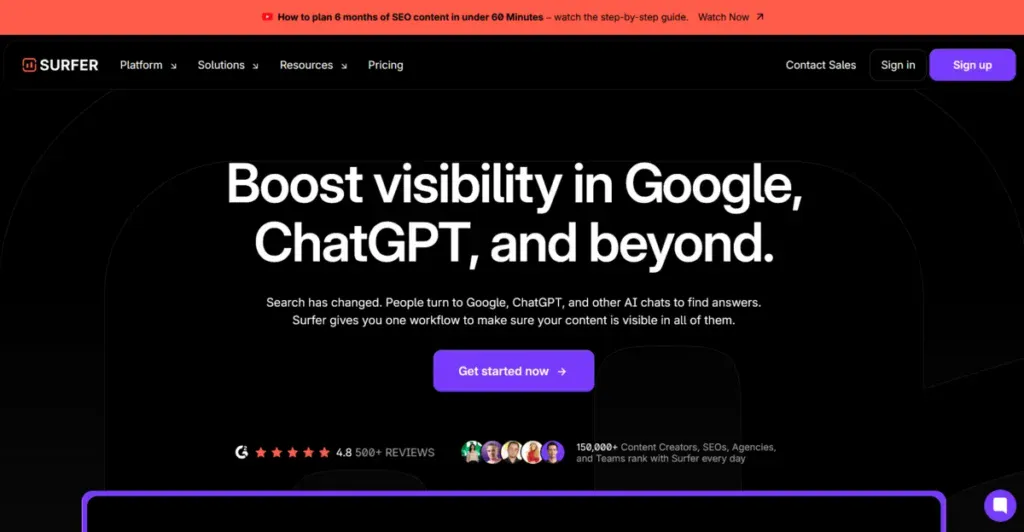
Surfer SEO is a cloud-based content optimization platform that reverse-engineers search engine results pages to deliver evidence-based recommendations. The tool checks more than 500 on-page signals from top-ranking pages for your keyword. Then, it gives clear guidelines on word count, keyword use, content structure, and formatting.
Your content receives immediate feedback through a proprietary Content Score ranging from 0 to 100. Research conducted by Surfer found that this score maintains a 0.28 correlation with Google rankings. You can optimize content for up to 20 keywords at once per query.
Core capabilities
The Content Editor is the platform’s foundation and provides live optimization suggestions as you write. You receive instant updates on keyword density, heading structure, paragraph count, and image requirements.
The Auto-Optimize feature reviews your draft. It adds useful NLP terms to improve your Content Score. This happens without changing your main message.
Surfer AI generates complete article drafts based on your target keyword and handles research, writing,and optimization in one automated workflow.
The platform offers a Content Audit tool that checks your pages against top-ranking competitors. This identifies missing keywords and structural gaps. The SERP Analyzer provides historical data on word counts for ranking pages and displays competitor Content Scores for benchmarking purposes.
Internal linking automation connects to your Google Search Console and suggests relevant anchor text placements across your site. The AI Humanizer rewrites AI-generated text to sound more authentic, while the AI Detector distinguishes between human-written and machine-generated content.
Strengths
Surfer SEO excels at streamlining on-page optimization through its user-friendly interface. The platform is used by over 150,000 customers across 159+ countries. You get native integrations with Google Docs, WordPress, and ChatGPT that allow you to optimize content without switching between multiple tools.
The Content Score provides an objective standard backed by competitive analysis rather than arbitrary guidelines. The tool uses real-time SERP data to update recommendations, ensuring you follow current trends instead of outdated practices.
Limitations
Following Surfer SEO’s advice too closely can cause keyword stuffing. This makes content sound robotic and focuses more on scores than on what readers find valuable. Additionally, the platform’s keyword research capabilities lag behind dedicated platforms like Ahrefs or Semrush in terms of accuracy and depth.
You’ll need third-party subscriptions for backlink analysis, technical SEO audits, and robust keyword discovery. The platform’s AI-generated content requires substantial human editing and fact-checking before publication. Some users report that the sheer volume of data points can feel overwhelming, particularly for new users.
2. Clearscope

Clearscope is a content optimization platform. It uses natural language processing technologies from Google, OpenAI, and IBM Watson. The platform looks at the best search results for your target keyword. It pulls out important terms, topics, and questions you need to include to compete.
Rather than relying on simple keyword matching, Clearscope analyzes semantic relationships between concepts to guide content creation. The tool recently expanded into Answer Engine Optimization and tracks your brand’s presence across AI chatbots like ChatGPT and Gemini, as well as traditional search engines.
Core capabilities
The Content Editor provides instant grades from F to A++ based on term coverage and content depth compared to competitors. Topic Explorations pulls keyword ideas from Google Autocomplete to reveal what users type into search bars.
The AI Draft feature creates first drafts that are about 80% complete. However, you’ll still need human editing for original perspectives and a natural flow.
Content Inventory connects to your Google Search Console. It checks your published pages for performance drops, technical errors, and Striking Distance chances. These are small tweaks that could move pages from position 11 to the first page.
You can optimize easily with native integrations for Google Docs, WordPress, and Microsoft Word. No need to switch platforms. Internal linking suggestions appear immediately as you write to boost your SEO.
Strengths
Companies using Clearscope report measurable results. One team increased non-branded keyword traffic by 130% in 2024. Another saw organic traffic jump 52% by doing what the tool recommended. The platform saves content teams between 1.5 and 3 hours per article. You can share reports with collaborators without requiring them to create accounts. All plans have unlimited users and projects.
Limitations
The platform caps AI Drafts at 20 per month on both Essentials and Business tiers, which restricts high-volume publishing teams. Support is limited to email, and the lack of a live chat option can lead to delays when deadlines approach. Clearscope specializes in on-page optimization but lacks backlink analysis, technical audits, and rank tracking found in complete SEO suites. Beginners face a learning curve in understanding how to apply recommendations.
3. Rankability
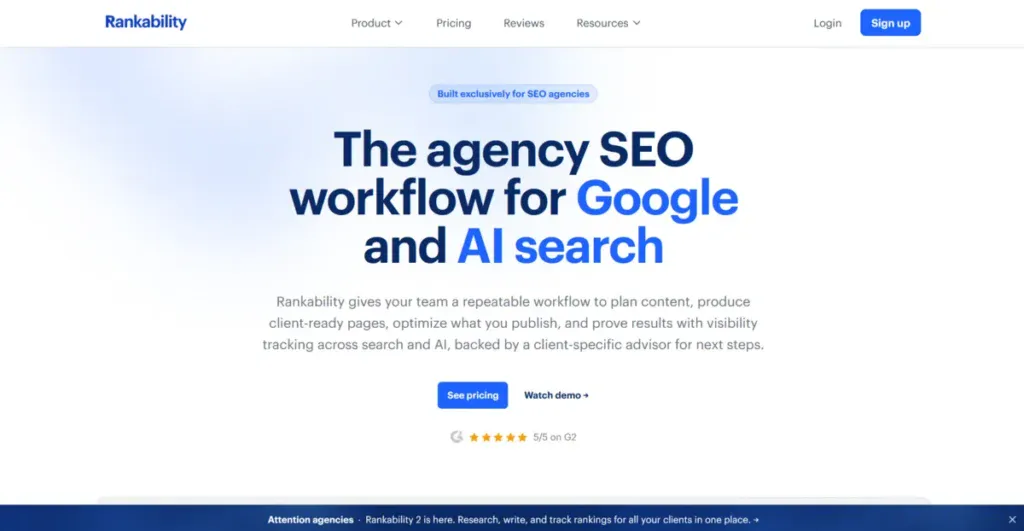
Rankability launched in 2024 as an agency-focused platform that combines IBM Watson and Google NLP for keyword recommendations. This dual NLP approach analyzes competitor content from traditional search results and AI platforms like ChatGPT and Perplexity to identify coverage gaps.
Your team gets a unified workflow spanning from keyword discovery to rank tracking without platform switching. The tool extracts content from URLs, eliminating manual copy-pasting during optimization checks.
Core capabilities
The platform integrates five core tools to streamline your workflow. The Researcher finds keywords on Google, YouTube, and Reddit while tracking trending topics. It uses clustering and gap analysis to compare your content against up to three competitors.
The Copywriter creates briefs and drafts based on your client’s Knowledge Base. You fill this base by uploading files, entering website URLs, or typing in text directly. Optimizer scores SEO performance based on real competitors. It provides prioritized checklists for topic coverage and keyword placement, not vague suggestions.
The Reporter tracks visibility across 11 platforms, including Google and Bing, plus seven AI search engines. It monitors both traditional rankings and AI mentions, along with citations. Advisor acts as a strategy consultant. It answers client-specific questions using data from Google Search Console, Google Analytics, and Google Business Profile.
Every action consumes credits from your monthly allocation. Credits reset each billing cycle, though additional packs are available mid-cycle. Beyond its credit system, the platform ensures global reach by supporting content creation in 32 languages.
Strengths
Weekly mastermind calls with SEO experts distinguish Rankability from software-only competitors. The simple interface requires minimal training. Live feedback appears as you work. White-label reporting lets agencies present data under their own branding. API access enables custom integrations.
Limitations
Rankability launched in 2024, so some features remain under development. Users report that the technical audits lack depth and crawling capacity.
4. NeuronWriter
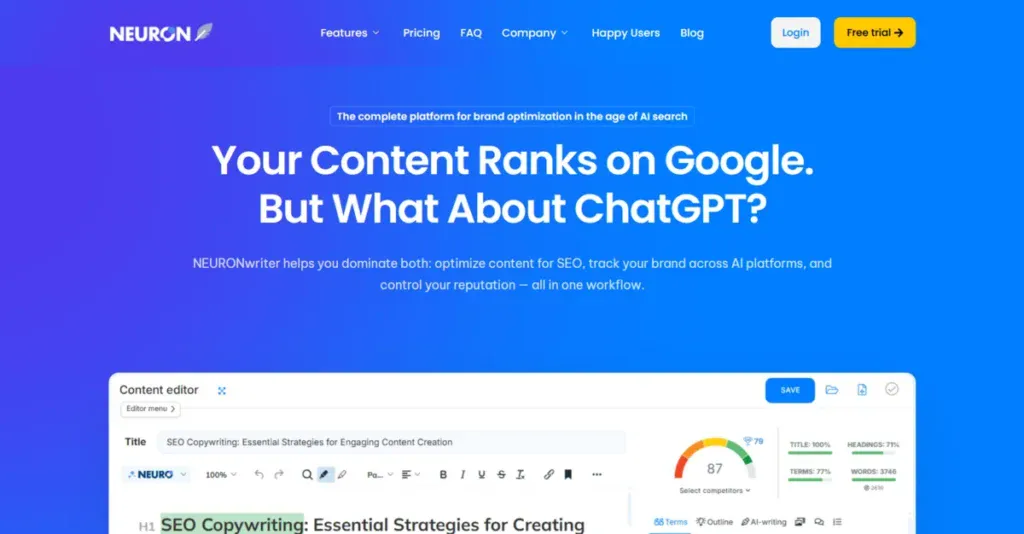
Over 45,000 users globally have completed more than 500,000 analyses with NeuronWriter. This platform blends semantic SEO with natural language processing, using models like GPT-4o and Claude Sonnet 3.5.
The software analyzes top-ranking pages for your keyword to provide optimization tips based on competitor data. As you write, your content receives a score from 1 to 100 based on how well it meets search intent and semantic coverage compared to the top 30 results.
The tool helps create content in multiple languages. It recognizes variations like “run” and “running” as semantically related rather than separate keywords.
Core capabilities
The Content Editor provides real-time scoring as you write. Meanwhile, TOP Analysis checks up to 100 competitors. Content Designers can get full articles with just one click. They use your outline and insights from competitors.
The Auto-Insert feature suggests terms found in the sidebar. It also replaces overused phrases with synonyms for smoother flow. The Internal Linking feature scans your existing content and recommends relevant connections.
The Outline Builder suggests headings with unused terms to expand topic coverage. Gold tier subscribers get access to plagiarism checks, WordPress and Google Search Console integrations, custom AI templates, and the option to use their own OpenAI keys.
Strengths
The platform earned a 4.8 rating from 797 reviews. Brands like Decathlon and Electrolux rely on NeuronWriter to optimize content. The interface mirrors Google Docs to make editing familiar. Pricing starts at $23 monthly, while comparable tools exceed $60.
Limitations
New users face a learning curve navigating the interface. Additionally, AI-generated drafts show inconsistent quality and require substantial editing before publication.
5. Semrush SEO Writing Assistant
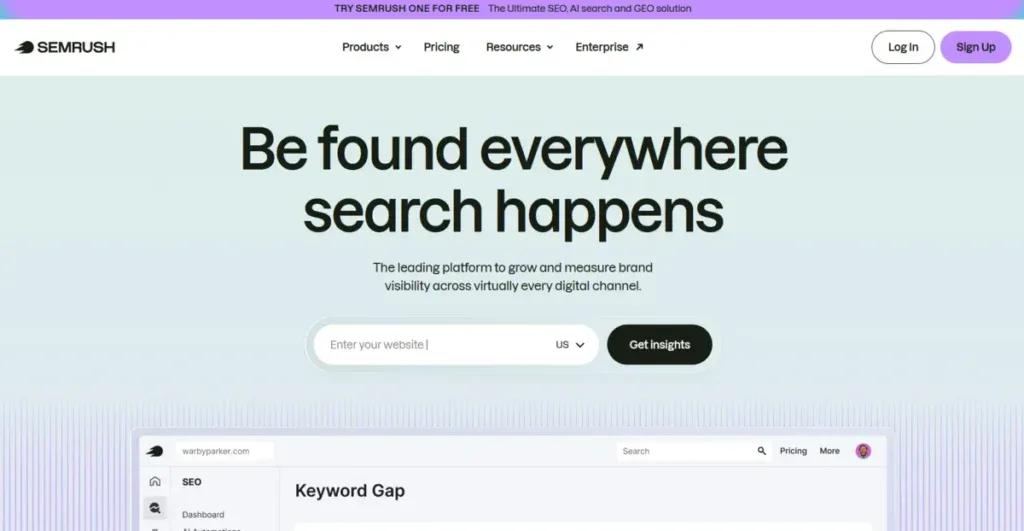
Semrush SEO Writing Assistant integrates into your writing process. It checks your content based on four key metrics: SEO performance, readability, tone of voice, and originality. The tool plugs into Google Docs, WordPress and Microsoft Word. You optimize your content without switching between platforms or copying text back and forth. You enter target keywords, and the assistant pulls recommendations from the top 10 organic results that rank for your query. Your draft receives a combined score of up to 10 that updates as you write.
Core capabilities
The platform tracks keyword usage while flagging potential over-optimization. Readability scores use the Flesch reading ease formula. It compares your content to that of competitors. Tone analysis classifies your writing from casual to formal, then flags sentences that deviate from your chosen brand voice.
The originality checker scans text against the web to identify duplicate content and displays matching sources. Smart Writer uses credits for its AI features, like a rephraser. This tool can rewrite, simplify, expand, or summarize chosen text.
Strengths
The tool integrates with your workflow, which eliminates context switching. Up-to-the-minute data comes from current top performers rather than outdated guidelines.
Limitations
The SEO Writing Assistant needs a Semrush Guru or Business subscription. It won’t work as standalone software. Free and Pro tier users are limited to just two documents per month. Aside from cost, the score-based optimization can push you toward gaming metrics instead of serving readers.
The guidance feels generic compared to specialists such as Surfer SEO or Clearscope that offer deeper topic modeling.
6. MarketMuse
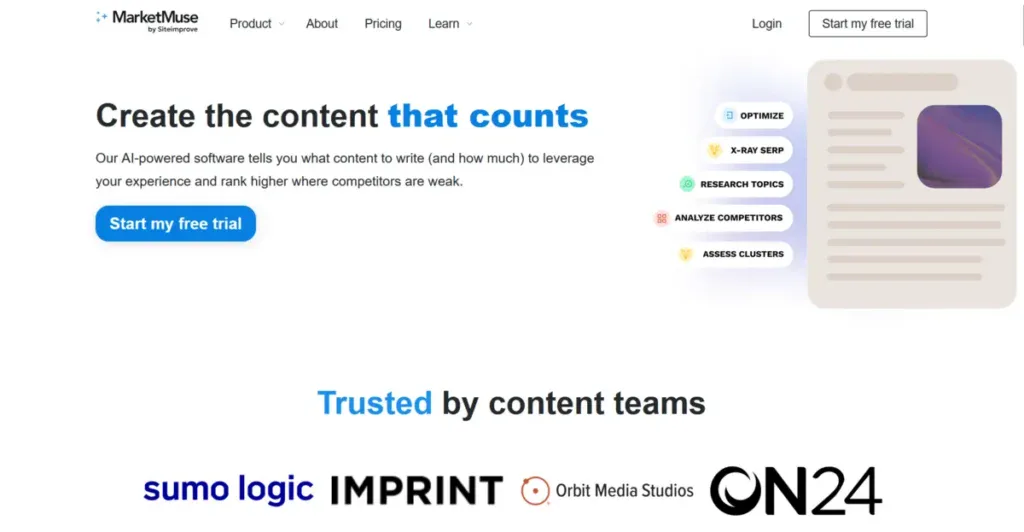
MarketMuse launched its platform in 2013. At that time, no APIs offered the deep topic modeling the founders envisioned. The platform’s technology scans your site inventory to assess your topical authority. It shows where you rank well and points out gaps where competitors excel.
Customized difficulty scores estimate your ranking probability based on your specific domain strength rather than generic competition metrics. While the platform recently added generative AI to speed up drafting, its main strength remains planning and prioritization. This is achieved through automated cluster analysis and identifying competitive gaps.
Core capabilities
The workflow spans four stages. Research finds high-value topics by comparing your content to competitors. This helps identify gaps and untapped subtopics. Plan builds structured content strategies to tackle topic clusters, including effort estimates to fill gaps and achieve differentiation. Brief creates detailed outlines with topic guidelines, keywords, and competitor insights to guide writers. Write offers AI help focused on content quality. This tool uses a topic model to create rich sections that improve Content Score.
The Optimize editor gives instant feedback with a Content Score. This score shows how well your content covers topics compared to competitors. The score evaluates relevant concepts and entities rather than chasing a perfect number.
Heatmap analysis reveals gaps in competitor coverage you can exploit. Connect identifies internal linking chances and boosts content score using anchor text from the platform’s topic model.
Generative AI prompts include “Improve Writing” for clarity, “Make Longer” to expand context, “Expand a Concept” to add themes, and “Make Shorter” for condensation.
Strengths
Teams report a 4x to 10x increase in traffic with MarketMuse-optimized pieces. The platform removes guesswork by providing clear metrics for content prioritization and creates trust across teams.
Content plans that would take two or three days to complete manually are completed in minutes. The topic-based approach outperforms generic AI writing assistants by factoring in topic relevance alongside SEO. Users praise the user-friendly briefs, with headings, content tips, and keyword suggestions that simplify article creation.
Limitations
New users face a learning curve in understanding how to raise scores without bloating sections or damaging readability. The platform requires you to make editorial decisions rather than automating everything. This approach may not work if you lack the comfort level making those choices or the expertise to do so.
Beginners find the dashboard overwhelming, even with experience. Some reviews note that the information display feels excessive. Training sessions help teams become comfortable with the interface.
7. ChatGPT Plus
OpenAI’s ChatGPT Plus brings GPT-4 language processing to on-page SEO workflows at $20 per month. The subscription unlocks reasoning models o1 and o3 that recursively check outputs for accuracy.
You access the tool to cluster keywords, create content briefs, generate meta descriptions, and analyze semantics without specialized SEO training. The free version handles simple queries. The paid tier removes rate limits that interrupt your workflow during high-volume tasks.
Core capabilities
ChatGPT Plus handles semantic keyword clustering faster than manual analysis. You upload spreadsheets with title tags. The tool fills in nearby columns with meta descriptions that are 120 to 158 characters long.
However, check the output, as it might not always meet the length requirements. The platform generates content outlines by predicting FAQs and common search queries.
Voice prompts and DALL-E 3 image creation expand multimodal capabilities. Paid subscribers get priority access during peak server traffic and faster response times for all features.
Strengths
The $20 monthly cost undercuts specialized SEO platforms that charge $60 to $500. General access persists during high-traffic periods when free users face downtime.
The o1 and o3 reasoning models reduce hallucinations compared to standard GPT-4o by spending additional processing time to verify information before responding. You work with a familiar conversational interface that requires no technical setup or training.
Limitations
ChatGPT operates on text patterns without access to real-time search volume data and requires cross-reference with keyword research tools before targeting terms. Beyond these technical data gaps, the model can also hallucinate facts and cite non-existent sources.
Additionally, training data contains biases that surface in responses. You risk copyright infringement because the model generates content that resembles existing copyrighted material. Because of these risks and potential hallucinations, all content requires fact-checking before you publish. Rate limits also affect paid users during image generation and complex queries.
8. Alli AI
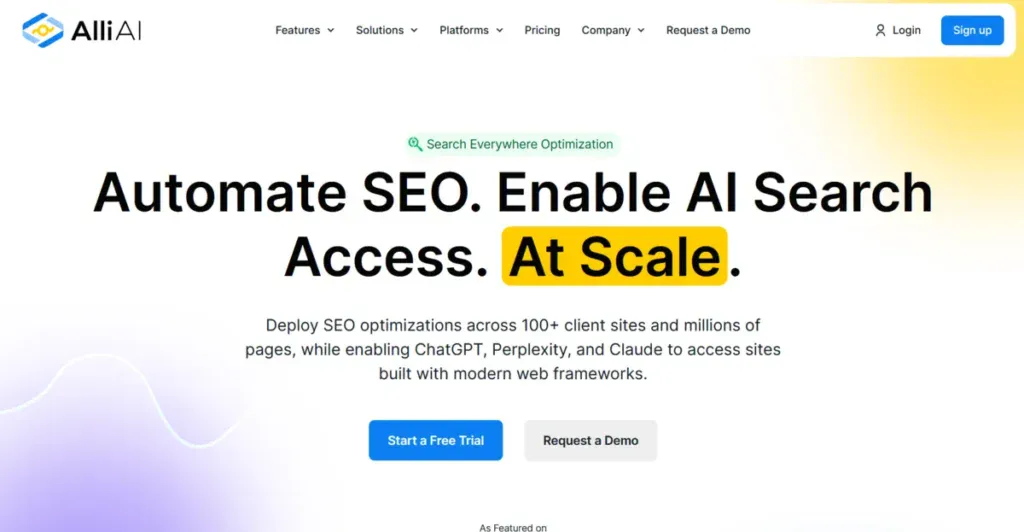
Alli AI operates through a JavaScript code snippet that deploys SEO changes to any website without manual code edits. The company started operations in 2017 and now serves over 26,000 companies.
Agencies managing large page volumes benefit most from this platform. You create optimization rules once and apply them to matching pages across your portfolio. The system provides server-side rendering infrastructure that detects AI crawlers and serves pre-rendered HTML to ChatGPT, Perplexity, and Claude.
Core capabilities
The platform combines rule-based deployment with visual editing to give you granular control. You can deploy title tag updates to 10,000 pages across 50 sites within 60 seconds. The browser-based editor works with WordPress, Shopify, Wix and any other CMS seamlessly.
Features include automated schema markup generation and internal linking suggestions. SEO A/B testing optimizes titles while keyword rank tracking monitors traditional search engines and seven AI search platforms, including Perplexity and Claude.
Strengths
Deployment speed is the main advantage. Users report going from months of manual work to instant live changes. One client made 17 million code changes within minutes. The unified dashboard eliminates training staff on different CMS platforms per client.
Limitations
All optimizations reverse the moment you cancel the service. This creates a dependency where businesses continue paying to maintain rankings. Changes are deployed through JavaScript rather than permanent website modifications. Users cite high pricing and an overwhelming volume of recommendations as concerns.
9. Scalenut

Scalenut positions itself as an autonomous AI webmaster through its OnPage Pro add-on and shifts focus from traditional SEO toward Generative Engine Optimization. The platform detects on-page issues and deploys fixes across your website without needing a developer.
You install a code snippet that monitors meta titles, descriptions, canonical tags, external links, schema markup, and image alt text in real time. This system works with any CMS and lets you skip platform migrations.
Core capabilities
The Detection AI flags issues, including missing meta titles, empty tags, incorrect HTML placement, multiple conflicting titles, and length violations exceeding 60 characters. Resolution AI generates GPT-powered fixes with one-click approval workflows.
Deployment AI pushes changes at scale with instant revert options. The tool identifies external links failing to open in new tabs and schema markup with improper structure that prevents rich results. Meta descriptions get flagged when missing, empty, outside the head tag, duplicated, or exceeding 160 characters.
Strengths
Testimonials report major time savings. One small business owner tackled website title issues faster than manual methods. An SEO consultant received over 2,000 recommendations that would have taken weeks of manual labor to implement.
A startup founder described the experience as having the expertise of an in-house SEO director with one-click ease. The platform boasts a 4.8 rating from 19 verified customer reviews.
Limitations
Scalenut now offers unified GEO plans instead of its previous SEO subscription tiers. The platform requires understanding GEO principles to get the most value. AI-generated drafts show repetitive phrasing common across AI writing tools. New users invest time learning the various tools and features before achieving optimal results.
10. Jasper AI
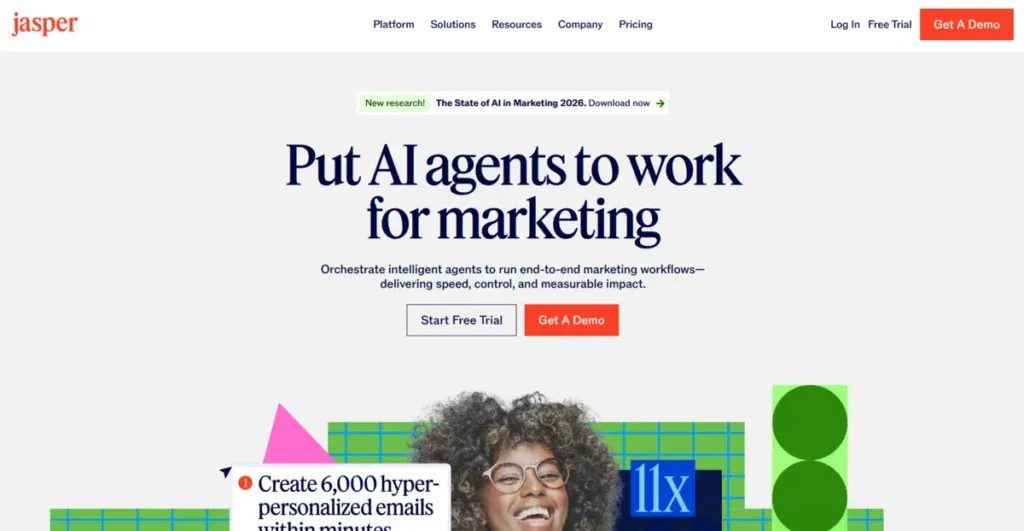
Jasper AI is a generative marketing platform that over 100,000 businesses use to create written and visual content with brand consistency. The software trains on your specific brand guidelines and voice rather than producing generic AI outputs.
You can deploy Jasper in email campaigns, social media, websites, and any platform where content appears. The tool earned a 4.8 rating from over 10,000 customer reviews.
Your team works within a collaborative environment that lets you assign content, track status, and set workspace defaults for brand voice and product knowledge.
Core capabilities
Brand customization is central to the platform via uploaded style guides or content samples that teach the AI to match your tone.
A Chrome and Edge extension adds the writing assistant to Gmail, WordPress, Google Docs, HubSpot, and LinkedIn. You can use it without switching apps. The Canvas editor handles long-form content creation, while Jasper Chat provides conversational assistance to brainstorm and draft. Over 50 templates cover diverse needs, including social media ads, blog posts, email campaigns, and product descriptions.
The Optimization Agent brings together keyword research, competitive analysis, and content optimization. It creates automated workflows that match your brand assets. Surfer SEO integration adds an SEO mode to the Pro plan. API access on Business plans connects Jasper’s AI to your existing systems.
Strengths
Jasper generates long-form articles in minutes compared to hours of manual writing. The platform supports content creation in over 30 languages with natural-sounding grammar.
The tool maintains brand voice consistency across team members and content types. Partnership integrations eliminate the need to switch platforms by embedding AI where you already work.
Limitations
Content output requires substantial human editing before publication. Users describe generated text as flat, generic, and lacking unique points of view. The tool struggles with complex topics that need technical language or deep subject knowledge.
Fact-checking becomes necessary because Jasper learns from patterns rather than verified sources. You still need content expertise and workflow design skills to extract maximum value. The plagiarism checker through Copyscape costs extra beyond the subscription price.
11. Writesonic
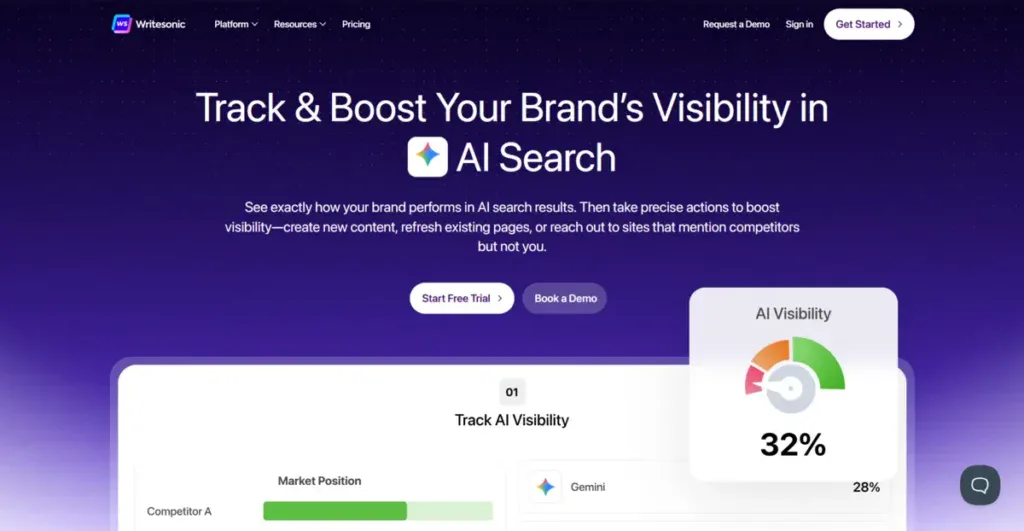
Writesonic began in 2021 as an AI writing assistant and has since expanded into what the company calls a Generative Engine Optimization platform that tracks brand visibility across AI-powered search engines like ChatGPT, Perplexity, Gemini, and Google AI Overviews.
The platform now serves three distinct purposes: generating blog posts, ad copy, and social media content; optimizing content for traditional search engines through built-in SEO tools; and monitoring how your brand appears when users ask questions of AI chatbots.
The Content Optimization feature is an advanced GEO solution that scans your existing website pages and identifies specific optimization opportunities to boost citation rates by 60-70% across AI-generated responses.
When someone asks ChatGPT or Claude a question related to your industry, ensure your brand appears more often in the answer. The platform assesses articles, landing pages, and documentation against proven GEO best practices, then delivers actionable recommendations through an Action Center dashboard.
Core capabilities
The AI Article Writer serves as the platform’s content generation engine. You provide a topic, and the system researches over 100 sources, analyzes competitor content, creates a structured outline, and generates articles up to 5,000 words.
The tool has fact-checking, citation-sourcing, and automated internal linking suggestions. You can upload your own documents, and the writer transforms that existing material into content crafted for professionals.
Brand voice customization learns your writing style from samples you provide, then applies that voice across all generated pieces. The tool publishes the output to WordPress without manual copy-pasting.
The SEO Checker & Optimizer operates inside the editor and provides guidance as you write. You receive a live content score that updates with each paragraph and identifies content gaps while suggesting ways to strengthen SEO performance.
The optimizer assesses ranking pages to surface competitor terms and long-form content signals worth addressing. You can apply recommended changes on autopilot, though you’ll still refine for writing style and accuracy afterward.
Keyword research tools display search volume and potential traffic for different terms and guide your selection of phrases that boost rankings. The platform integrates Google Search Console on paid plans and allows performance tracking without switching platforms.
Strengths
Speed stands as the primary advantage users cite. The AI Article Writer generates 3,000-word articles in about five minutes. The platform earned over 15,000 five-star ratings from content writers, SEO experts, and agencies. More than five million users rely on Writesonic for content production.
The built-in SEO integration saves time compared to managing separate platforms for keyword research, content optimization, and performance tracking. You access data from Google Keyword Planner, Ahrefs, and Semrush within Writesonic without needing separate subscriptions.
This combined approach means you work in one interface rather than switching between multiple tools. The SEO tools provide actionable feedback instead of vague suggestions.
Limitations
Content quality remains the most common user concern. Generated articles require substantial editing to sound natural and provide unique insights. Multiple reviewers describe the output as generic or “AI-sounding” without human polish.
The quality depends on the prompts you provide, and some users find that the content resembles ChatGPT output. The tool creates redundant sentences or deviates from topics; therefore, it requires careful review and editing before publication.
Long-form content often fails AI detection tests, which matters when submitting to publications or clients who check for machine-generated text.
Interface complexity creates friction for new users. By grouping the AI Article Writer, Chatsonic, SEO tools, and generative engine optimization (GEO) features into one dashboard, the platform makes it difficult to find specific functions.
12. SEOpital
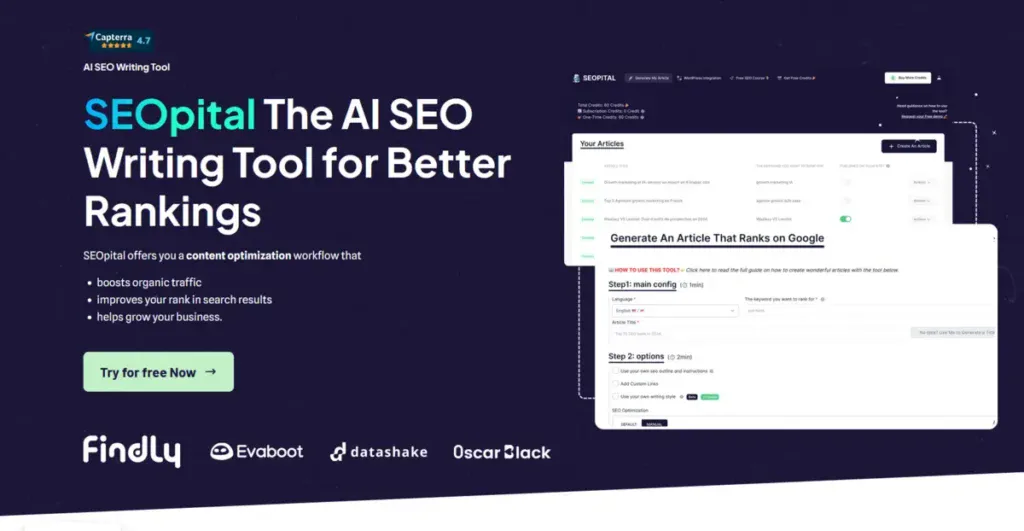
SEOpital created its platform using a web scraping algorithm. This algorithm trains AI with data pulled straight from Google search results. It doesn’t depend on static language models. This approach targets a problem plaguing generic AI writing tools: hallucinations and inexpert, low-quality outputs.
The platform checks the top 10 SERP spots for your keyword. It then adds key terms to semantically optimize your content. Semantic optimization is a process that goes beyond just adding keywords. It focuses on creating relevant content that matches search intent.
You enter a keyword, and SEOpital checks current rankings. Then, it creates content that includes competitor insights and important ranking factors. By understanding search values in real time, the system positions your pages to compete directly against top performers.
Core capabilities
The platform centers on keyword analysis and clustering as its foundation. SEOpital sorts keywords automatically. It removes duplicates based on search intent. It also categorizes them and excludes terms where you already rank well. For example, “Google advertising cost” and “Google advertising price” are grouped together because they have similar intent. This feature saves hours typically spent on manual semantic audits.
Keyword clustering helps create detailed pillar articles. This is better than making thin pages that compete for keywords and cause keyword cannibalization. The system processes 50-75% of keyword variations with shared search intent.
Content generation capabilities span multiple formats. You can produce blog articles, category pages, and service pages with just a few clicks. The tool analyzes top-ranking Google results to incorporate these successful strategies into your content.
Strengths
Content quality stands out as SEOpital’s primary advantage. The SERP-driven approach produces expert-level content informed by relevant, current information. Users consistently praise the high quality of the AI-generated material.
The speed of results impresses users. One person tried SEOpital overnight and by morning saw their article ranking highly for a challenging, competitive topic. This rapid indexing and ranking demonstrates the platform’s effectiveness. Semantic optimization ensures content meets current ranking criteria instead of using outdated tactics like keyword stuffing.
Keyword research and clustering automation save time. SEOpital’s tool finds optimal keywords and creates clusters for strategic content creation. This eliminates tedious manual sorting. You receive a ready-to-use keyword list without spending hours organizing terms. The clustering prevents you from cannibalizing your own rankings by accidentally targeting similar intent across multiple pages.
Limitations
The credit system creates confusion for many users. This credit-based pricing makes it hard to predict the cost per article or monthly needs. One detailed review describes the credit system as limiting.
The keyword clustering tool consumes an absurd amount of credits for little value. This problem extends to article generation, which costs two credits per run despite the system often ignoring instructions. Because you may need to regenerate an article several times to get a usable result, you can quickly deplete your monthly credit balance. This inefficiency makes the platform expensive relative to output.
Credit packs are expensive, with users reporting higher prices than similar AI tools. The cost is up to 20 times higher than that of competitors, even after discounts. One reviewer mentions credits are low and expects the introduction of new tiers with higher allocations to benefit lifetime deal users. The usage-based billing makes budgeting difficult.
13. Koala AI
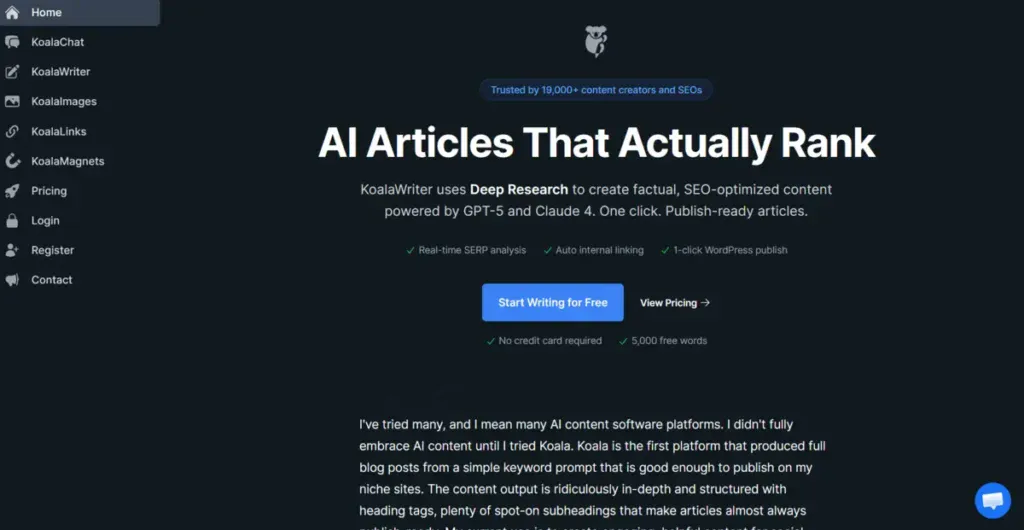
Koala AI markets itself as the only platform that generates formatted long-form blog posts with one click, with minimal prompting. The software fuels content creation with GPT-5 and Claude 4. It stands out by pulling data from trusted sources before crafting articles, instead of just using language model training data.
Your subscription provides access to five interconnected tools: KoalaWriter for article generation, KoalaChat functioning as an SEO-focused chatbot with immediate data access, KoalaImages for visual creation, KoalaLinks for internal linking, and KoalaMagnets for lead generation through embeddable custom GPTs.
Deep Research Mode represents the platform’s signature capability. The system uses significantly more context to research your topic than standard AI models and sources authoritative data to create factual, well-cited content that requires minimal editing.
Core capabilities
KoalaWriter handles automatic high-quality blog post creation from start to finish. The system picks the right outline based on your keyword, sources appropriate references, and suggests internal linking opportunities.
Choose from different article types, including standard blog posts or Amazon roundup articles for affiliate content.
The tool offers 28 total writing variations combining seven tones of voice: authoritative (described as SEO-optimized), excited, professional, friendly, formal, casual ,and humorous. Point of view options include first-person (I), second-person (you) , or third-person (he/she/they) perspectives.
Strengths
Content quality earns consistent praise from users. One publisher states that Koala is the only tool writing fully formatted, current, and attributed blog posts in one click with minimal prompting.
A user on the official site notes they didn’t embrace AI content until trying Koala fully, describing it as the first platform producing blog posts from keyword prompts ready for niche site publication.
Speed advantages materialize right away. Article creation time drops from seven hours to one hour according to user testimonials. This efficiency allows you to generate the initial draft of a 2,000-word article in approximately 10 minutes.
Structured output with subheadings makes articles almost always publish-ready.
Limitations
The platform aims to produce publish-ready output, yet you still need to invest time refining material to pass detection tools and feel authentically human.
Credit expiration creates budget waste. Credits expire at the end of each billing cycle with no rollover for unused words. This “use it or lose it” policy penalizes teams with fluctuating content needs. You pay for 15,000 words monthly, but generate 8,000 only, meaning the remaining 7,000 disappear without refund or future availability.
Annual plans and Credit Packs provide more flexibility than monthly plans since credits last for an entire year. However, customers who remain on the monthly plan must use careful planning to avoid wasting money.
Get a Custom AI SEO Strategy That Improves Visibility With Blacksmith
Not every tool on this list will revolutionize your SEO workflow, and that’s fine. Your business size, content volume, and budget determine which platform delivers real value. To take full advantage of these tools, you’re going to need a solid SEO strategy to support them.
But creating a solid SEO plan takes a lot more effort than it seems, especially if you’re trying to create a roadmap that also caters to AI search engines. These plans can take weeks of tweaking and corrections before they’re fully ready to be implemented.
That is time you could be using on other aspects of your business, so now what?
That’s where we come in. Blacksmith is an AI SEO Agency of digital marketing experts ready to create the ideal SEO strategy for your business.
Still unsure whether an SEO strategy is what your business needs to grow? Don’t worry, schedule a call with us, and we’ll provide you with a complete brand and website audit. This way, we can show you the areas where a lack of an SEO strategy is truly hurting your visibility and how a new strategy can help you build sustainable growth over time.