





Need an AI keyword generator that actually works? Your SEO success depends on finding the right keywords.
Many businesses target the wrong keywords. They might get traffic, but struggle to see actual revenue. The SEO world has changed, and AI-powered tools now shape how businesses approach keyword research and content optimization.
Recent data shows ChatGPT currently drives 87.4% of all AI referral traffic. AI traffic has seen an incredible 750% jump year over year. The market offers plenty of AI SEO keyword generator options. The challenge lies in finding tools worth your time and money.
This piece compares the top 18 AI keyword generator tools clearly. You’ll find everything from free AI keyword generators to complete SEO keyword generator AI platforms.
Trying to improve your SEO strategy, but don’t know where to start? Let us help.
1. Google Keyword Planner
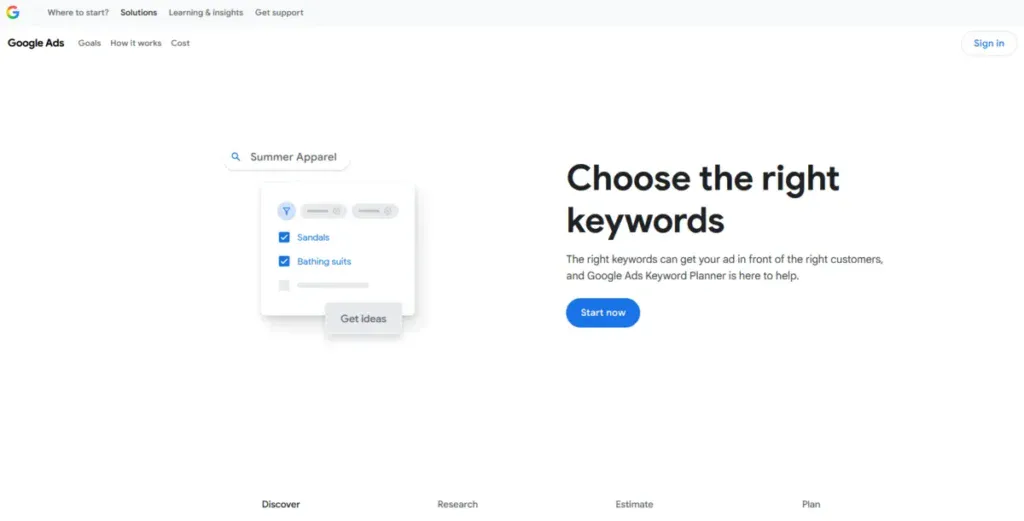
Google Keyword Planner remains the original keyword research tool that runs on Google’s internal data. New AI keyword generators might have fancy features, but this fundamental tool still matters for paid and organic search strategies.
Google Keyword Planner Features
The tool gives you direct access to Google’s big search data. You can find new keywords for your business by entering seed keywords, phrases, or website URLs. The system shows you monthly search volumes and provides historical trends and forecasts for clicks, impressions, and conversions.
Google Keyword Planner combines smoothly with your Google Ads campaigns, unlike many standalone AI keyword tools. You can sort keywords into ad groups and add them right to your existing campaigns.
Google Keyword Planner Pricing
Setting up a Google Ads account gives you free access to Google Keyword Planner. The system needs your billing information to use simple features like “Get ideas for new keywords.” You don’t need to run ads or spend money to use the tool.
Accounts with no spending or low budgets have limits. Search volume data shows up as broad ranges (e.g., 1K-10K) instead of exact numbers. This makes many users switch to paid alternatives when they need precise volume metrics.
Google Keyword Planner Pros and Cons
Google Keyword Planner’s biggest strength comes from its direct access to Google’s proprietary data. Local businesses can find geo-targeted keywords easily. The tool also gives valuable insights into seasonal trends.
The tool has some drawbacks. It focuses on advertisers, which limits SEO-related data. Users see search volumes in broad ranges rather than exact numbers. Different search intents often end up grouped in broad keyword categories.
2. Ahrefs
Ahrefs has evolved from a backlink analysis tool into a leading SEO platform. The tool has one of the web’s largest crawlers and offers reliable keyword research capabilities.
This is our go-to AI keyword generator tool for most of our projects.
Ahrefs Features
The Keywords Explorer is the heart of Ahrefs’ keyword research tools. It contains over 28.7 billion keywords filtered from 110 billion keywords found in total. Users get practical metrics like Keyword Difficulty to check ranking challenges, accurate search volumes with yearly trends, and Traffic Potential to estimate clicks from top positions.
The platform’s instant keyword clustering makes it unique. It groups related terms by parent topic and eliminates duplicate research. The AI Content Helper studies search intent, spots content gaps, and recommends SEO-friendly structure.
Content Explorer helps users find trending topics and link-building opportunities. The new Brand Radar add-on watches your brand presence on major AI search platforms.
Ahrefs Pricing
The platform comes in five pricing tiers. A basic Starter plan costs $29/month with limited tool access. The Lite plan costs $129/month ($99/month yearly) and gives you 500 monthly credits, 750 tracked keywords, and six months of data history.
The Standard plan costs $249/month with two years of history, unlimited credits, and 2,000 tracked keywords. Power users can choose the $449/month tier that includes five years of history and 5,000 tracked keywords. Enterprise plans begin at $1,499/month with a yearly commitment.
Ahrefs Pros and Cons
The platform’s backlink database spots new or lost backlinks faster than competitors. Its traffic estimates match Google Search Console data 99% of the time, beating alternatives by five percentage points. Users love its easy-to-use interface that simplifies complex data.
The platform does have its drawbacks. The credit system limits usage on paid plans, which frustrates agencies managing multiple accounts. Prices are higher than most competitors, especially with add-ons. New users need time to learn all its features.
3. Semrush
Semrush goes beyond typical SEO tools and provides a complete marketing platform with AI-driven keyword research capabilities. The platform has over 55 tools that cover SEO, content marketing, social media, and competitive research.
Semrush Features
The Keyword Magic Tool sits at Semrush’s core. It creates thousands of keyword combinations from a single seed keyword and searches through a database of over 27 billion keywords. The Keyword Overview tool shows complete metrics such as search volume, keyword intent, CPC, competition level, and trends locally and globally.
Semrush stands out by showing your competitors’ most profitable keywords and finding “not provided” keywords through Google Analytics integration. The platform’s AI Content Generator creates complete, SEO-optimized drafts based on your target keywords.
Semrush Pricing
Semrush has three main pricing tiers: the Pro plan starts at $139.95/month, Guru at $249.95/month, and Business at $499.95/month. You get a 17% discount with annual billing.
The Pro plan tracks 500 keywords and gives 10,000 results per report. Small businesses and beginners will find this suitable. The Guru plan increases to 1,500 keywords and adds content marketing tools. The Business plan tracks 5,000 keywords and includes API access.
Semrush Pros and Cons
Semrush shines with its integrated marketing suite approach. Businesses that need broader functionality in their marketing tasks will find it valuable. Users like how it reduces campaign research time and helps improve SEO by evaluating links, opportunities, and gaps.
The biggest drawback is its price compared to other options. Some users find the platform challenging if they’re new to keyword research. The sophisticated interface takes time to learn properly.
4. Surfer SEO
Surfer SEO revolutionizes keyword research through its analytical insights and on-page optimization platform. The platform analyzes over 500 ranking factors from top-performing pages and guides your content creation process.
Surfer SEO Features
The Content Editor stands as Surfer’s main feature that gives optimization suggestions while you write. Your content receives a Content Score (0-100) based on keyword usage, structure, and relevance to top-ranking content. The platform’s Keyword Research tool finds topic clusters by analyzing competitor rankings. This helps you build topical authority through strategic content planning.
The SERP Analyzer looks at competition for specific keywords and gives an explanation about word count, keyword density, and page structure. The Audit tool spots optimization opportunities within minutes for your existing content. The platform has AI-powered features like outline building and content generation to make your workflow faster.
Surfer SEO Pricing
The Essential plan has 30 Content Editor articles and 5 AI-generated articles monthly. Scale plans add team collaboration features that work for up to 4 users. Each plan comes with a 7-day money-back guarantee, which you can extend to 30 days if you ask.
Surfer SEO Pros and Cons
Surfer stands out with its detailed content analysis, Google Docs integration, and quick content auditing capabilities. Users consistently praise the customer service.
The platform has some drawbacks. New users might feel overwhelmed at first. The base plan doesn’t have Natural Language Processing queries.
5. Keyword Insights
Keyword Insights uses SERP-based clustering to build topical authority through hosted content clusters. This focused tool helps identify content gaps, groups keywords, and optimizes your content strategy workflow.
Keyword Insights Features
Keyword Insights excels at clustering keywords based on actual search results rather than simple keyword-matching algorithms. The system analyzes the top 10 SERP results for each keyword.
The platform automatically classifies keywords by search intent. It analyzes ranking page types and SERP features to determine if queries are informational, transactional, or commercial. The tool gets more and thus encourages more AI-powered content outlines after clustering.
Keyword Insights Pricing
Keyword Insights uses a credit-based pricing model. Different operations need varying amounts of credits. Keyword clustering uses 1 credit per 10 keywords, SERP context scans use 1 per keyword, content brief generation requires 10-20 credits per brief, and intent classification is included with clustering.
The platform has tiered plans with different monthly credits, starting from a one-time payment option of $7.99.
Keyword Insights Pros and Cons
Keyword Insights reduces 20-hour keyword analysis projects to 2-3 hours. Its SERP-based clustering proves more reliable than algorithmic keyword matching. The tool works well with large datasets, processing 10,000+ keywords as easily as 500 keywords.
The platform has some limitations. You need to import keyword lists from other tools since it lacks a native keyword database. The credit system can be tricky to calculate for different workflows.
6. SEOwind
SEOwind blends AI automation with human editorial expertise to create SEO-optimized content at scale. This hybrid platform started as a tool for in-house teams writing EEAT-compliant articles and has grown into a detailed content production system.
SEOwind features
SEOwind’s strength comes from its “CyborgMethod,” a system where AI handles the heavy lifting while humans add vital nuance. The platform creates SEO-focused content briefs by analyzing SERP data, extracting headings from competitors, adding “People Also Ask” questions, and suggesting keyword frequency.
The platform provides one-click keyword research capabilities that identify secondary terms grouped into AI-driven clusters. SEOwind excels at suggesting internal links by connecting with Google Search Console data.
SEOwind Pricing
The AI keyword generator known as SEOwind starts at $49 monthly per user and offers a free trial without credit card requirements. Agencies looking for white-label content production can get custom pricing based on volume needs. Users can test the platform risk-free with a 7-day money-back guarantee.
SEOwind Pros and Cons
The platform’s time-saving workflow turns 20-hour research projects into minutes. Its “Humanize” mode enhances content quality beyond just avoiding AI detection. The EEAT scoring system helps users understand potential ranking issues.
The platform has some drawbacks. Users might face bugs in the brief editor while reordering headings. The interface can become slow during complex brief creation.
7. AlsoAsked
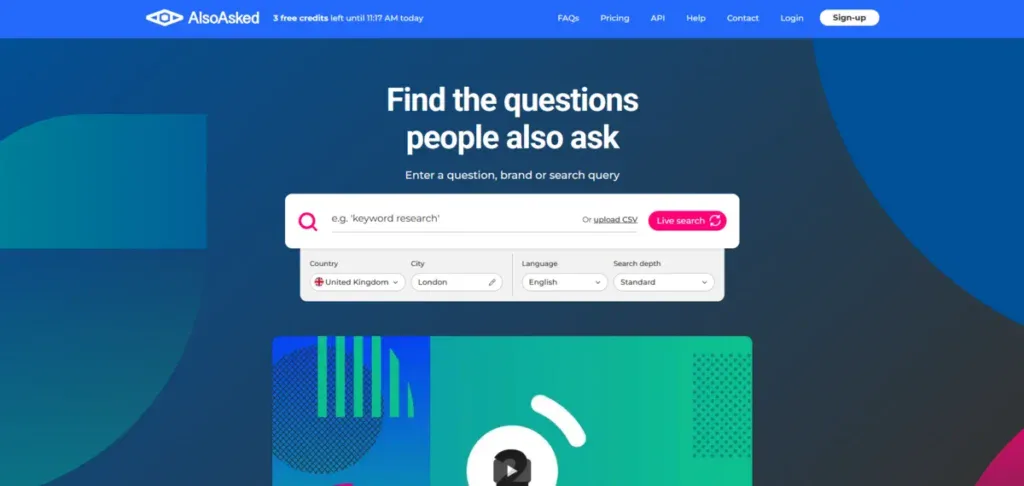
This AI keyword generator known as AlsoAsked specializes in visualizing “People Also Ask” (PAA) data from Google and presents questions in interactive tree diagrams that reveal topical connections.
AlsoAsked Features
The platform excels at visual relationship mapping and creates hierarchical structures that show connections between related topics. You can take a closer look at three levels of PAA results, which generate approximately 100-150 questions per query.
Users can export their findings as PNG images for visual presentations or CSV files with detailed question data. The bulk processing feature lets you analyze up to 1,000 search terms at once, making it valuable for agencies with multiple clients. The platform supports location-based searches that target specific geographic areas.
AlsoAsked Pricing
AlsoAsked has three subscription tiers:
- Basic: USD 12.00/month for 100 credits, PNG export, 24-hour history
- Lite: USD 23.00/month for 300 credits, CSV export, 1-month history
- Pro: USD 47.00/month for 1,000 credits, bulk searches, 1-year history
Users can try 3 free searches daily without signing up.
AlsoAsked Pros and Cons
AlsoAsked creates accurate maps of user search intent with immediate data. The visual exports work perfectly in client presentations. Each plan supports unlimited users, making it excellent for teams.
The tool has some limitations. Search volume metrics are not available. Users need at least the Lite plan for CSV exports. The specialized nature means it cannot replace complete SEO platforms.
Explore how we improved JSI’s backlink growth by 73% with a new SEO strategy in our most recent case study
8. Answer Socrates
Answer Socrates helps you cut hours of keyword research into seconds by using questions to find content opportunities. This specialized AI keyword generator pulls real user questions straight from Google’s search results.
Answer Socrates Features
Answer Socrates uncovers the questions people ask online. The platform’s recursive keyword research uses hundreds of question modifiers to find deeper, related topics without your original keyword. Tasks that usually take 4-5 hours now happen in under 60 seconds.
The tool instantly grabs every Google Autocomplete suggestion and finds variations from different cursor positions. The semantic keyword research pulls related terms, synonyms, and context-rich variations that match how search engines understand topics.
Answer Socrates Pricing
The free plan gives you 5 daily keyword searches, 5 recursive searches, and needs signup for CSV exports. All plans include Socrates Lite at $15 per month with 100 monthly searches, 30 recursive searches, and 3,000 cluster credits. Seneca at $29 per month with 500 monthly searches, 100 recursive searches, and 12,000 cluster credits. And Auerlius at $49 per month with unlimited monthly searches, 500 recursive searches, and 40,000 cluster credits.
Answer Socrates Pros and Cons
The tool stands out with its generous free tier compared to competitors like Ahrefs ($99/month minimum) and SEMrush (no free plan). The automated recursive search spots keywords that other tools miss completely. Users save 70% of their content planning time.
9. AnswerThePublic
AnswerThePublic transforms raw search data into useful content ideas through its search box. This visual keyword research tool pulls autocomplete data from search engines and shows what people actually search for online.
AnswerThePublic Features
Visual diagrams display questions, prepositions, and comparisons that people search using your seed keywords. Results are organized into subcategories such as which, what, why, at the time, how, who, are, and can. You’ll find search volume data and cost-per-click metrics for each keyword alongside these visuals.
Search alerts notify you about new suggestions for your tracked keywords. The platform expanded its capabilities to include data from Google, Bing, YouTube, Instagram, TikTok, and Amazon.
AnswerThePublic Pricing
Users can make 3 searches daily without signing up in the free version.
Plans include Individual at $11 monthly or $13.33 per month if billed annually ($160). Pro at $99 monthly or $57.75 per month billed annually ($693). And Expert at $199 per month or $116.08 per month billed annually ($1,393).
AnswerThePublic Pros and Cons
This AI keyword generator tool is excellent at delivering genuine search insights straight from users’ searches. Content ideation becomes faster as a single search produces approximately 100-150 questions. Client presentations become more engaging with the visualization format.
However, there are limitations. Restricted functionality in the free version pushes users toward paid plans. Results can sometimes be oddly specific or irrelevant.
10. LowFruits
LowFruits helps websites with lower domain authority find keywords they can actually rank for. This tool differs from other SEO platforms because it focuses on finding keywords with less competition.
LowFruits Features
The tool excels at finding “weak spots” in search results where websites with low domain authority rank well. Its Keyword Finder pulls long-tail keyword ideas straight from Google Autocomplete.
The boosted version gives you five times more targeted keywords. You’ll spot ranking opportunities easily because the SERP Analyzer shows the LowFruits logo next to weaker competitors.
The Domain Explorer lets you access more than 150,000 low-authority websites to analyze niches. You can learn from successful competitors by extracting their keywords through the sitemap extraction tool.
LowFruits Pricing
Pay-As-You-Go credits begin at $25 for 2,000 credits. Larger packages cost $60 (5,000), $100 (10,000), and $250 (50,000). The monthly Standard plan costs $29 for 3,000 credits, while the Premium plan gives you 10,000 credits for $79.
Yearly subscriptions save money at $249 for Standard and $749 for Premium. PAYG package credits last one year before they expire.
LowFruits Pros and Cons
This AI keyword generator tool shines with its user-friendly design that beginners love. It saves you lots of research time compared to doing things manually. The weak spot analysis gives you applicable information that normal difficulty scores miss.
11. Ubersuggest
Neil Patel’s Ubersuggest combines affordability with a user-friendly design. The tool makes advanced keyword research available to beginners and small businesses that don’t have enterprise-level budgets.
Ubersuggest Features
Ubersuggest uses AI-powered keyword research from its 100 million keyword database. The platform spots brands mentioned in AI models and suggests keywords. Users receive search volume, intent data, and difficulty scoring. The predictive analytics show potential traffic-driving keywords before you rank.
Ubersuggest Pricing
Plans include Individual at $12 per month or $120 lifetime with support for 1 website and 150 daily searches, Business at $20 per month or $200 lifetime with 2-7 websites and 300 daily searches. Lastly, Enterprise at $40 per month or $400 lifetime with 8-15 websites and 900 daily searches.
Each plan includes tracked keywords (125-300 based on tier). Users can add extra searches, domains, or keywords for $5/month. The lifetime access option lets you pay once and get permanent access with updates.
Ubersuggest Pros and Cons
Ubersuggest’s biggest strength is its value. It costs 90% less than competitor plans and is nowhere near as expensive as Moz. Complex data becomes digestible through its accessible interface. The tool works great for basic SEO needs.
12. Keywords Everywhere
The AI keyword generator known as Keywords Everywhere works as a browser extension that turns your regular browsing into an ongoing keyword research session by embedding data right into search results pages on multiple platforms.
Keywords Everywhere Features
This clever browser extension shows keyword metrics right on Google, YouTube, Amazon, and more than 20 other platforms. The tool displays search volume and CPC data while providing SEO difficulty scores, trend charts, and related keyword suggestions as you browse.
Keywords Everywhere Pricing
Annual subscription plans:
- Bronze: $84/year for 100,000 credits (1 user)
- Silver: $168/year for 400,000 credits (3 users)
- Gold: $480/year for 2 million credits (10 users)
- Platinum: $144,000/year for 8 million credits (20 users)
Each credit equals one keyword lookup, and credits last for 12 months. Users can try the free version that includes basic tools like Instagram hashtag generation and LLM prompt templates.
Keywords Everywhere Pros and Cons
The tool’s biggest strength is its efficiency; you see data without jumping between different dashboards. SEO professionals love its speed and up-to-the-minute data analysis while browsing. Small businesses and bloggers appreciate its budget-friendly pricing.
However, credits vanish after 12 months if unused. The tool works only with Chrome, Firefox, and Edge browsers, which limits device flexibility.
13. Frase
Frase is a powerful platform that optimizes content for traditional search engines and AI platforms like ChatGPT and Perplexity. The platform’s integrated approach manages content workflow from research to publishing.
Frase Features
Frase Agent examines top-ranking content and gives live optimization guidance while you write. The platform evaluates content using both SEO (search engine optimization) and GEO (generative engine optimization) metrics.
It excels at SERP analysis by finding content gaps through competitor keyword analysis. The platform’s one-click Auto-Optimize function enhances content visibility on search platforms.
Frase Pricing
Plans include Starter at $39 per month with 10 articles and 25 AI prompts, Professional at $103 per month with 40 articles and 100 AI prompts, Scale at $239 per month with 100 articles and 350 AI prompts, and Enterprise with custom pricing, article volume, and AI prompts.
Frase Pros and Cons
The platform’s data-driven recommendations from competitor analysis save valuable time. Frase merges naturally with Google Docs and WordPress. Users can optimize content in any language.
The platform has some drawbacks. New users often find the interface overwhelming. Individual freelancers might hesitate due to subscription costs. AI-generated content needs extra editing to maintain a consistent voice.
14. Outranking
Outranking connects keyword research with content creation through its data-backed AI solution for SEO content optimization. The platform helps users create factually accurate content that aligns with Google’s E-E-A-T (Experience, Expertise, Authoritativeness, Trustworthiness) standards.
Outranking Features
The platform’s core is an AI-driven content editor that provides immediate SEO scoring based on over 10 on-page metrics. Their unique “Concepts” feature pulls factual points directly from top-ranking pages to keep content accurate and relevant.
This method produces concise, factual drafts instead of “fluffy” AI content.
Writers can optimize content automatically as the platform weaves keywords while keeping the text readable. Outranking scans your sitemap to find internal linking opportunities between semantically related pages for existing content.
Outranking Pricing
Plans include Starter at $25 per month with 5 documents, 1 user, and limited AI drafts; SEO Writer at $79 per month with 15 documents, 2 users, and 8-12 AI drafts; SEO Wizard at $159 per month with 30 documents, 3 users, and 16-24 AI drafts; and Custom plans with contact-sales pricing and configurable documents, users, and AI drafts.
Outranking Pros and Cons
The platform does have a steeper learning curve compared to other options. Users often need tutorials to use its interface effectively. Monthly credits don’t roll over, which limits usage. While editors who enjoy detailed optimization will love this tool, it might not suit those looking for one-click publishing solutions.
Learn how we boosted Cision’s rate of new organic users by 332% with an SEO strategy in our latest case study.
15. Scalenut
Scalenut has grown from a simple SEO tool into a complete GEO (Generative Engine Optimization) platform. The platform helps content become visible on search engines and AI platforms like ChatGPT and Gemini.
Scalenut Features
Scalenut’s Content Optimizer sits at its core. It analyzes pages and gives a GEO-driven SEO score with useful recommendations. The powerful Cruise Mode creates SEO-optimized blog posts in under 5 minutes without compromising factual accuracy.
The platform’s Keyword Planner helps build topical authority through structured content clusters. The Traffic Analyzer sets it apart by giving page-level insights that improve content strategy.
Scalenut Pricing
Plans include Essential at $39 per month with 5 articles and 5 optimized pages, Growth at $79 per month with 30 articles and 30 optimized pages, and Pro at $149 per month with 75 articles and 75 optimized pages.
Scalenut Pros and Cons
The platform’s GEO Score stands out by connecting SEO optimization with AI visibility metrics. Writers without technical expertise can follow its clear guidance. The platform smoothly integrates AI writing with optimization capabilities.
The Auto Optimize feature might create generic content that lacks your brand’s voice. The platform cannot replace dedicated keyword research tools when you need large keyword databases. Teams looking for just optimization features might find the complete platform overwhelming.
16. Jasper
Jasper stands out as a social-first AI content platform that excels at brand consistency and campaign automation. The platform goes beyond simple keyword research and manages the entire content lifecycle.
Jasper Features
The platform’s reliable Canvas system helps marketers plan, create, and collaborate on content at scale. Marketers can connect data, creativity, and distribution in one system that automates the content lifecycle. The proprietary Brand IQ technology adapts to your brand’s voice. You can create multiple voice profiles that maintain a consistent tone across your content.
Jasper comes packed with 80+ specialized marketing apps. These apps are customized for product marketing, social media, and lifecycle marketing. The platform optimizes content for search engines and generative AI platforms with features that boost traffic and conversions.
Jasper Pricing
Jasper offers two main pricing tiers: Pro at $69 per month or $59 per month billed annually with 1 seat, 3 brand voices, and 10 knowledge assets, and Business with custom monthly and annual pricing that includes unlimited features, API access, and enterprise-grade security.
Users get access to Jasper in 30+ languages and its multiple AI engines with all plans.
Jasper Pros and Cons
The platform generates content 5x faster than manual methods. Marketing templates streamline processes through campaign-specific designs. Results speak for themselves – case studies show 166% growth in organic traffic and 50% faster SEO blog creation.
The platform does have its limitations. Content often needs human editing to add nuance and personal voice. New users might find the interface challenging at first.
17. ChatGPT
The well-known AI keyword generator ChatGPT works as a conversational AI assistant that enhances your keyword research through natural language interactions, setting it apart from dedicated keyword platforms.
ChatGPT Features
It excels at analyzing conversations to identify keyword patterns that standard tools might overlook. Its natural language processing helps predict search phrases people commonly use, which expands your potential keyword list. The tool creates semantic clusters of related keywords and establishes logical connections between terms.
ChatGPT does more than keyword discovery. It helps with on-page optimization by creating content, enhancing meta tags, and studying how competitors use keywords. You can develop better link-building strategies as it identifies websites in your niche for outreach campaigns.
ChatGPT Pricing
Plans include:
- Free at $0 with limited GPT access and message caps.
- Plus at $20 per month with full GPT 5.2 access and priority responses.
- Pro at $200 per month with extended limits and advanced models.
- Team at $25-30 per user with a shared workspace and admin controls.
- Enterprise with custom pricing that includes enterprise security and SLA guarantees.
ChatGPT Pros and Cons
ChatGPT processes information faster than human SEO specialists. Businesses targeting global audiences benefit from its multilingual capabilities. Your website gets consistent SEO best practices.
This AI keyword generator tool lacks search volume data and other metrics that professional keyword tools provide. Sometimes it delivers confident but incorrect information.
18. Ekamoira
Ekamoira helps businesses track their AI visibility by showing how they appear in AI search results compared to their competitors. This cutting-edge AI keyword tool takes SEO to the next level by optimizing content specifically for AI citations.
Ekamoira Features
The platform delivers a complete prompt-to-content pipeline that monitors visibility on Google AI, ChatGPT, and Perplexity. Your brand’s presence gets a visibility status: Winner/Cited, Warm Chance, or Cold Chance.
You can publish blog posts directly to your site through the exclusive MCP server integration with AI assistants like Claude, ChatGPT, and Cursor – no copy-paste needed.
Ekamoira Pricing
Plans include:
- Pioneer (Lifetime) at a $79 one-time payment with 750 credits that never expire and a limit of 20.
- Pro at $49 per month with 1,000 credits per month and a limit of 50.
- Growth at $99 per month with 2,500 credits per month and a limit of 100.
- Scale starting at $199 per month with 5,000+ monthly credits and unlimited usage.
Ekamoira Pros and Cons
The platform stands out with its pioneering AI visibility tracking across multiple platforms. Users appreciate its headless CMS architecture that works with Next.js and React integration. The Pioneer pricing at $79 gives you lifetime access with updates, which eliminates any recurring costs.
The platform does have some limitations. Pioneer tier users get monthly instead of weekly LLM updates. The credit system might seem complex to new users when planning different tasks.
Get a Custom SEO Strategy that Converts With Blacksmith
Your SEO strategy’s success depends on picking the right AI keyword generator tool. Each platform brings its own strengths to different marketing needs. But even when you find out the perfect keywords, the work isn’t over. You still need an SEO strategy and an actionable plan to make proper use of these keywords.
Creating an SEO strategy from scratch can take weeks and even months, depending on how complex the plan is. This is time you could be using on other aspects of your business, so now what?
That’s where we come in.Blacksmith is a Professional SEO Agency with a group of seasoned marketers ready to create the perfect SEO strategy for your business. From using up-to-date strategies to including custom niche strategies that apply exclusively to your industry, we’ll make sure your business gets the visibility it deserves.
Still unsure if investing in an SEO strategy is what your business needs? Don’t worry, schedule a call with us, and we’ll provide you with a free brand and website audit. This way, we can show you how a lack of an SEO strategy might be hurting your business more than you realize.